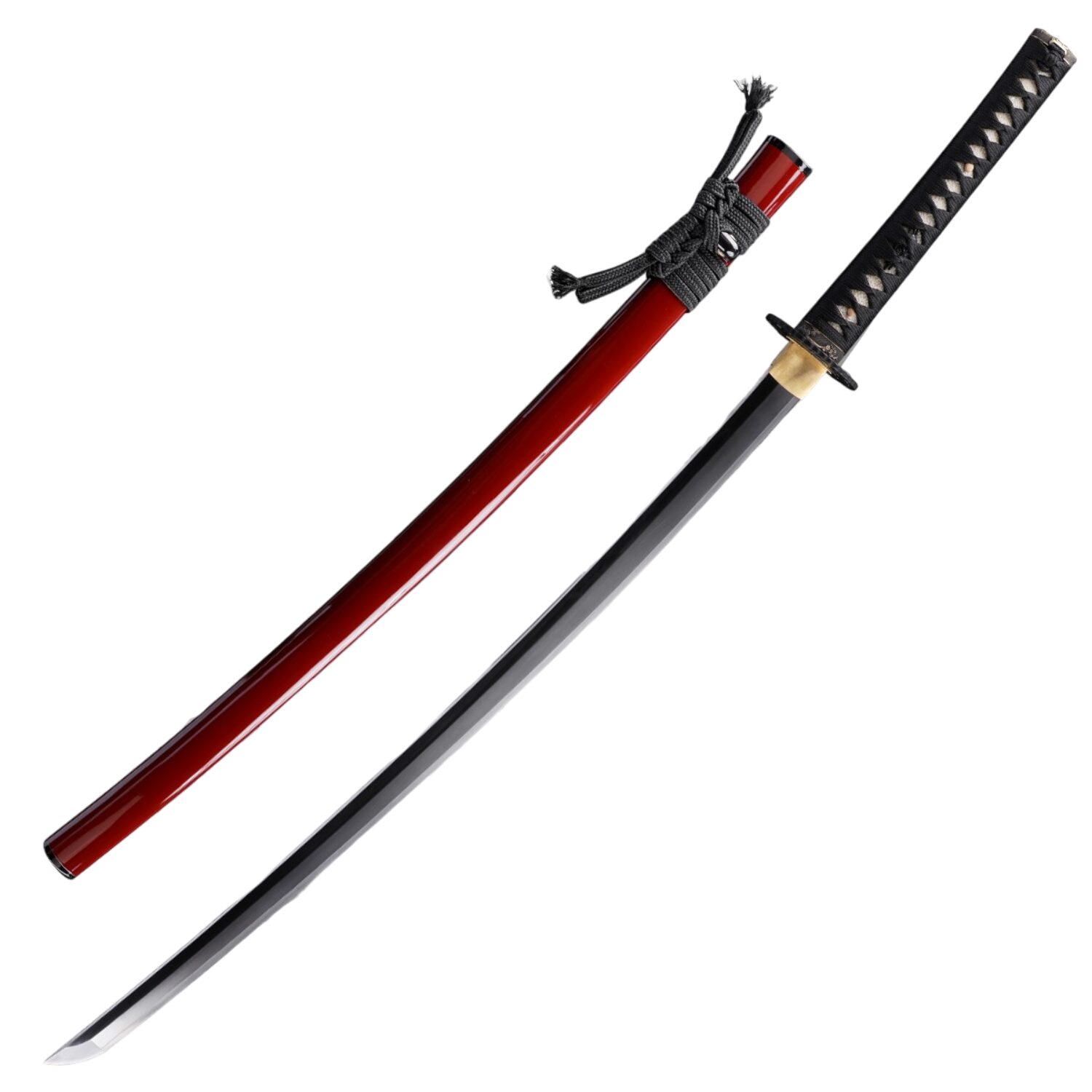
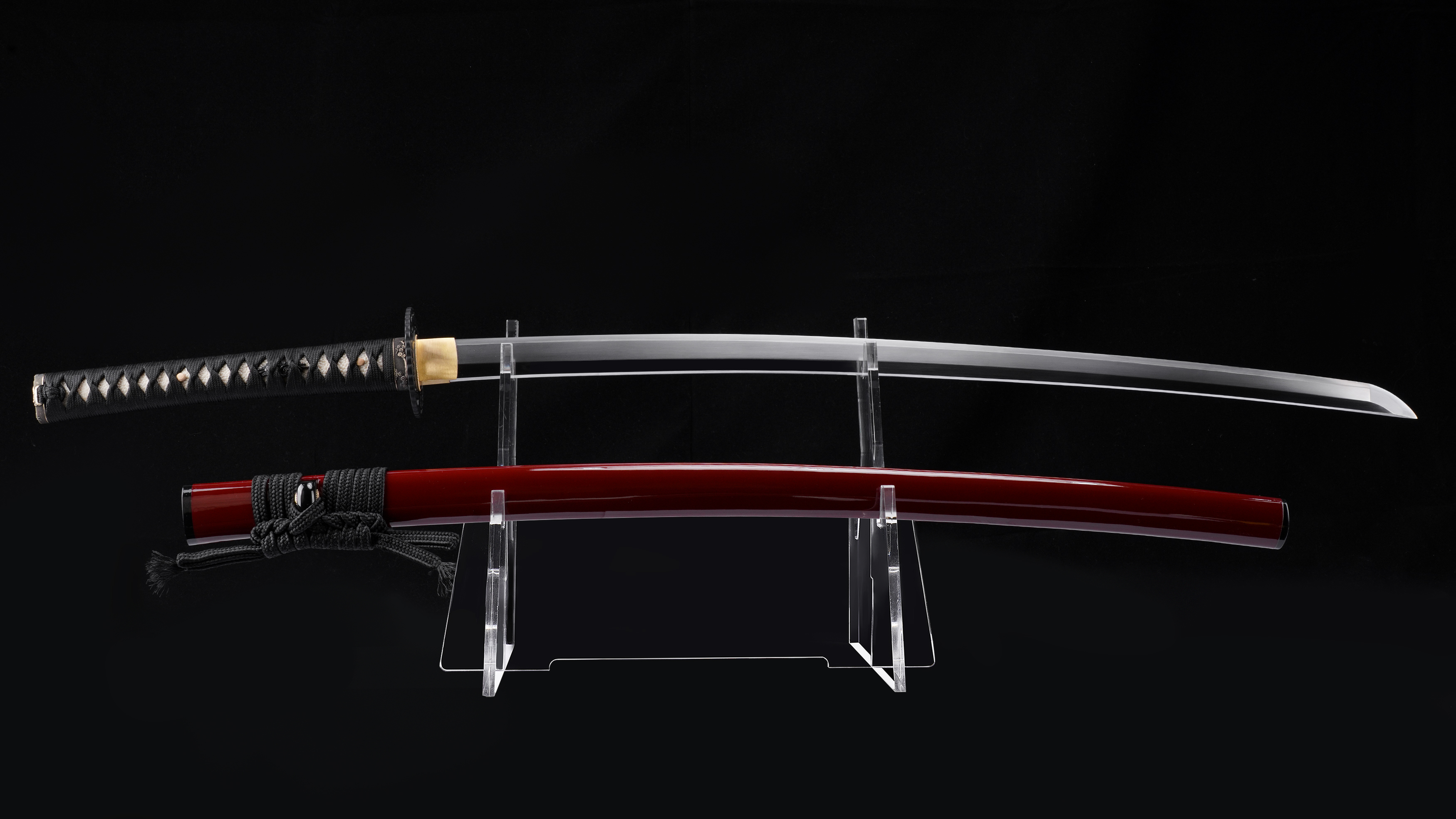
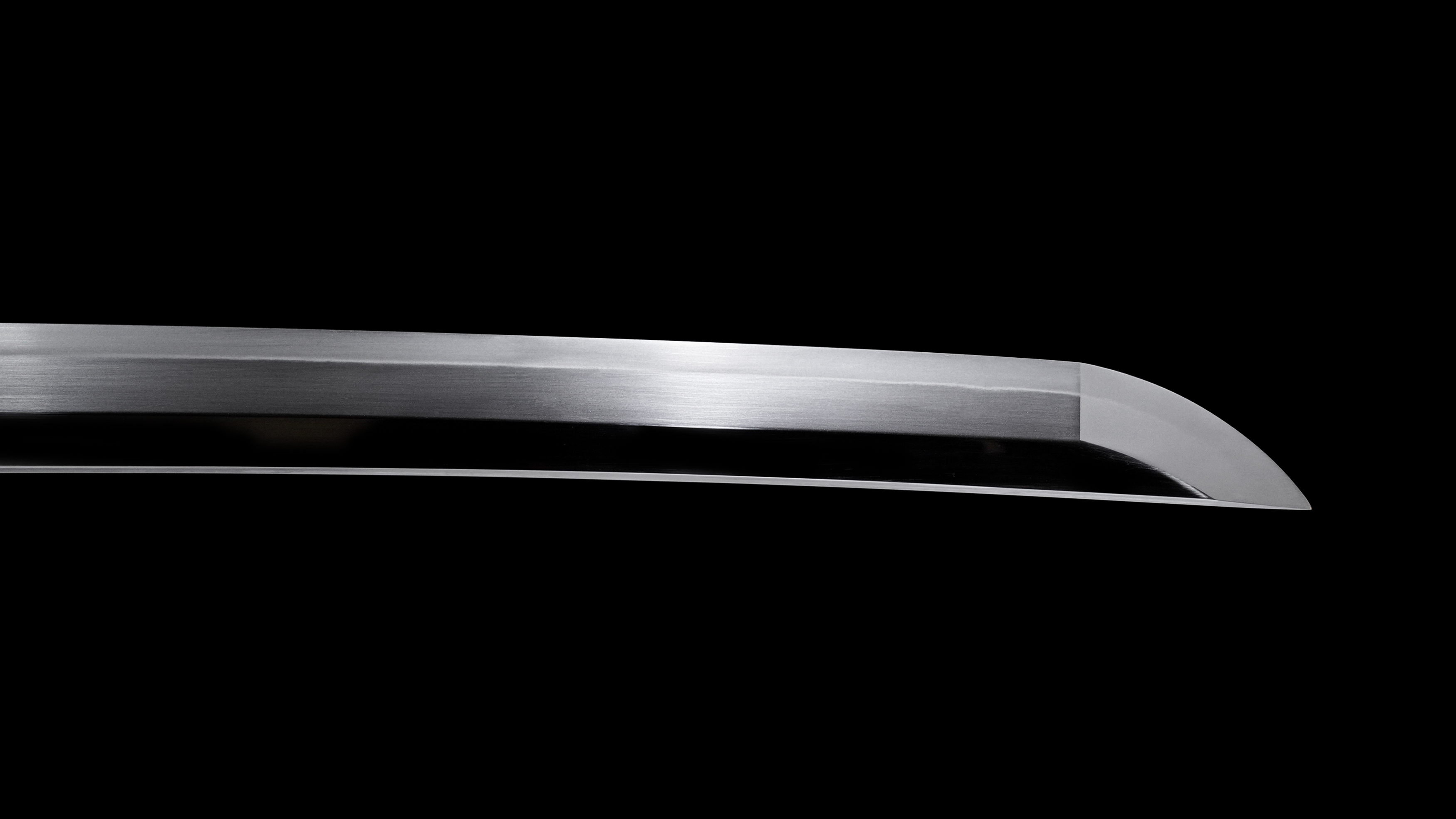
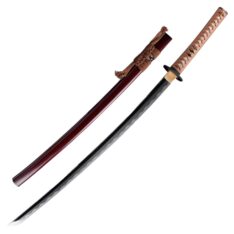
This vivid classic from Shadow Dancer has a shinogi zukuri (ridge line runs along the blade’s length on both sides) blade forged from crucible steel, a material prized for its ability to visually resemble tamahagane steel blades. The differential heat treatment and clay tempering process creates a blade with a hard edge while the spine remains more flexible. This process also yields an elegant suguha (straight) hamon accentuated through traditional sashikomi polishing.
Optional horimono (blade engravings) upgrades are available, with three different design choices:
Horimono #1
The full-length three-clawed dragon wrapped around a plum blossom branch is a rich and classical motif. While four and five-clawed dragons represent higher social ranking in other East Asian cultures, the three-clawed dragon remains the traditional hallmark in Japanese culture. Masters of the elements, the dragon represents control, power, protection, and strength. Meanwhile, the plum blossom blooms in late winter, symbolizing perseverance and resilience. Together, these two motifs create the perfect balance, combining martial prowess with inner peace.
Horimono #2
The Sankō-ken, 三鈷剣, a ritual sword that terminates in a three-pronged grip at its base is the sacred sword of Fudō Myōō, a fierce guardian in Japanese Esoteric Buddhism. This divine blade cuts through attachment, ignorance, and worldly illusions. Combined with the Bonji character, this horimono represents clarity, unyielding resolve, and the severing of negative karma.
Horimono #3
Depicting one of Esoteric Buddhism’s fiercest legends, Fudō Myōō, a wrathful protector who cuts through evil and delusion, battles a non-Buddhist heretic. Both transformed into flaming swords and locked in an even match until Fudō Myōō changed into Kurikara Ryū-ō, a golden dragon coiling around his opponent's blade, threatening to devour it from the tip. Capturing that moment of transformation, this horimono symbolizes the unyielding resolve and triumph over delusion.
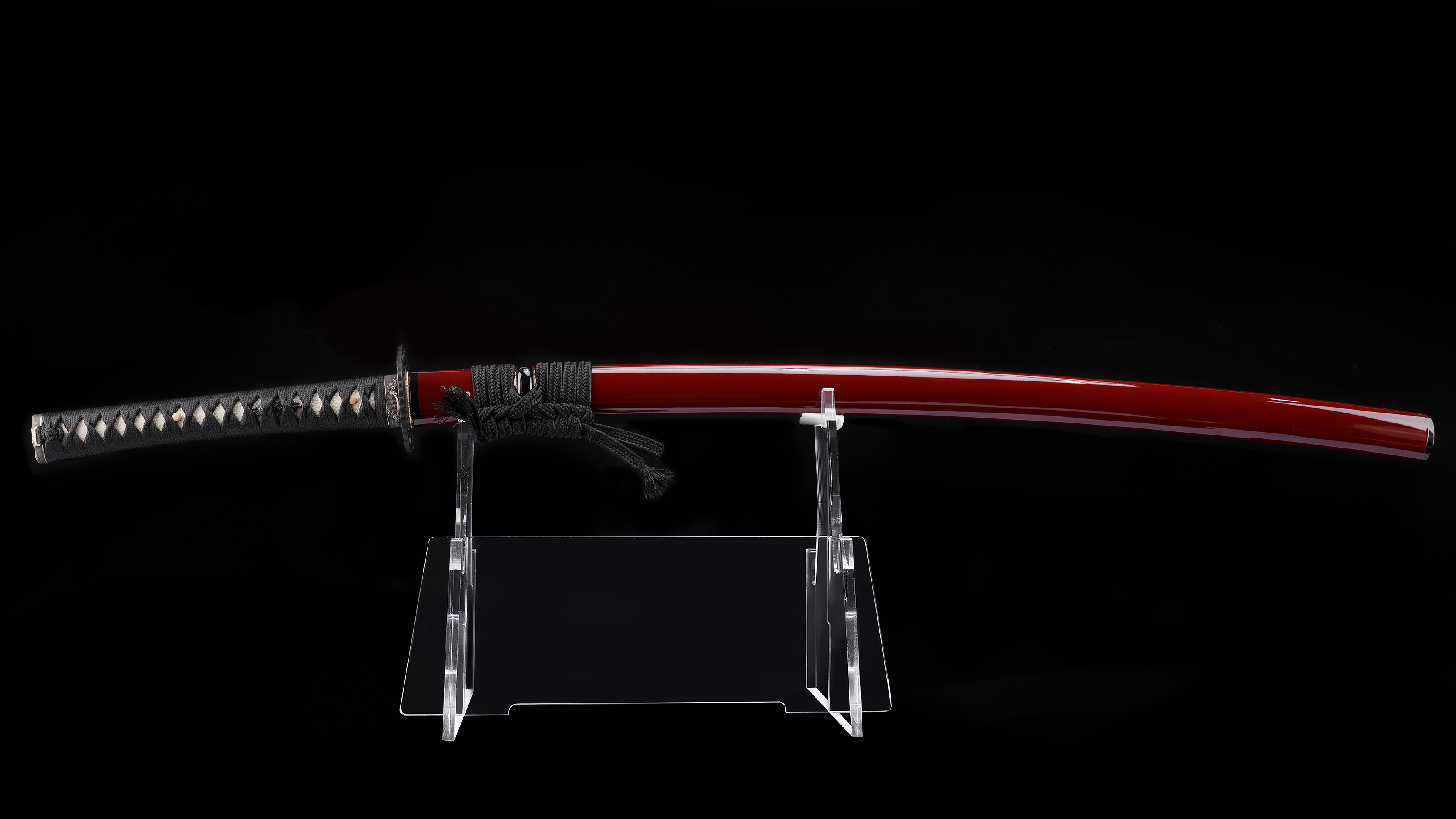
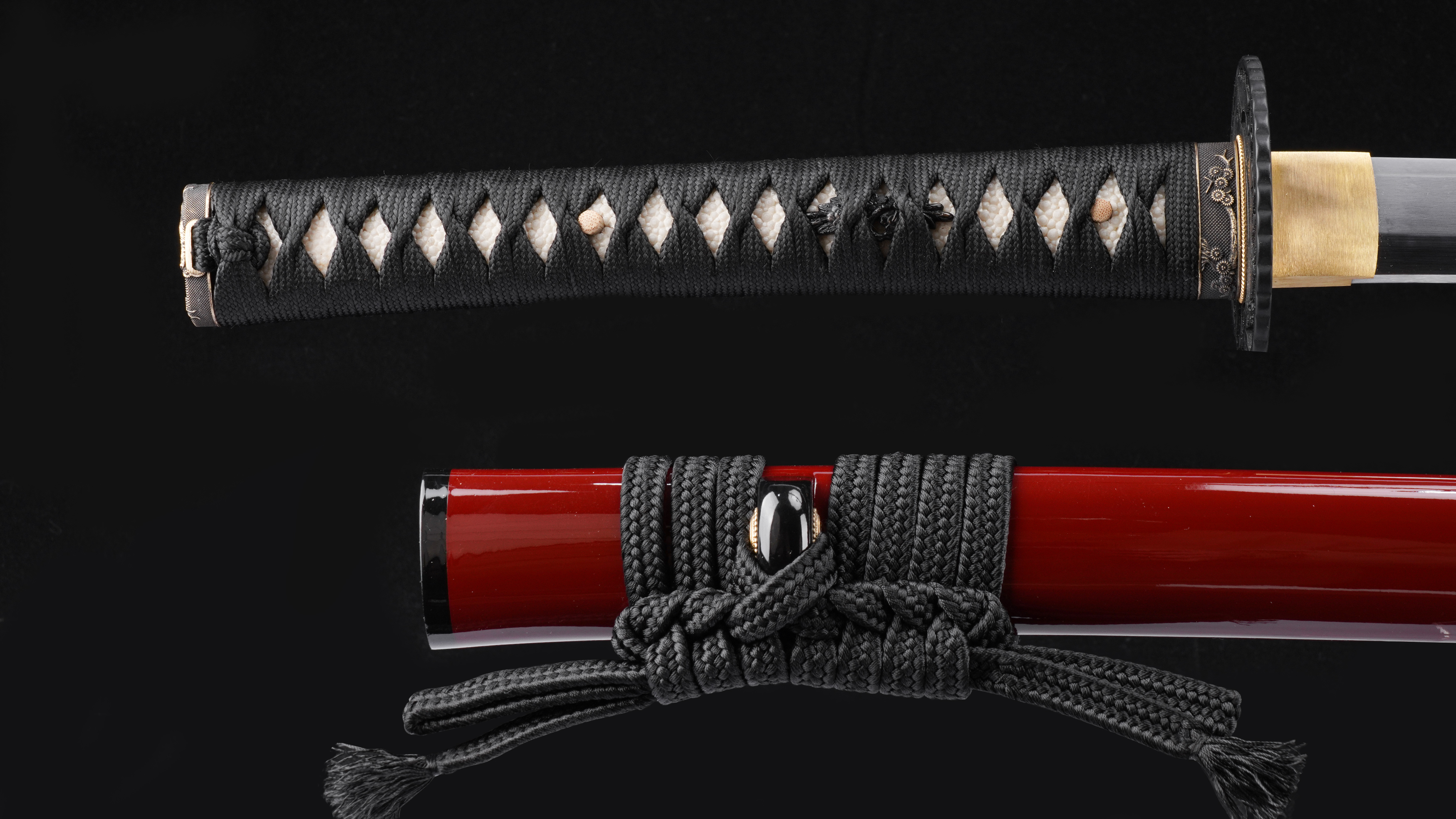
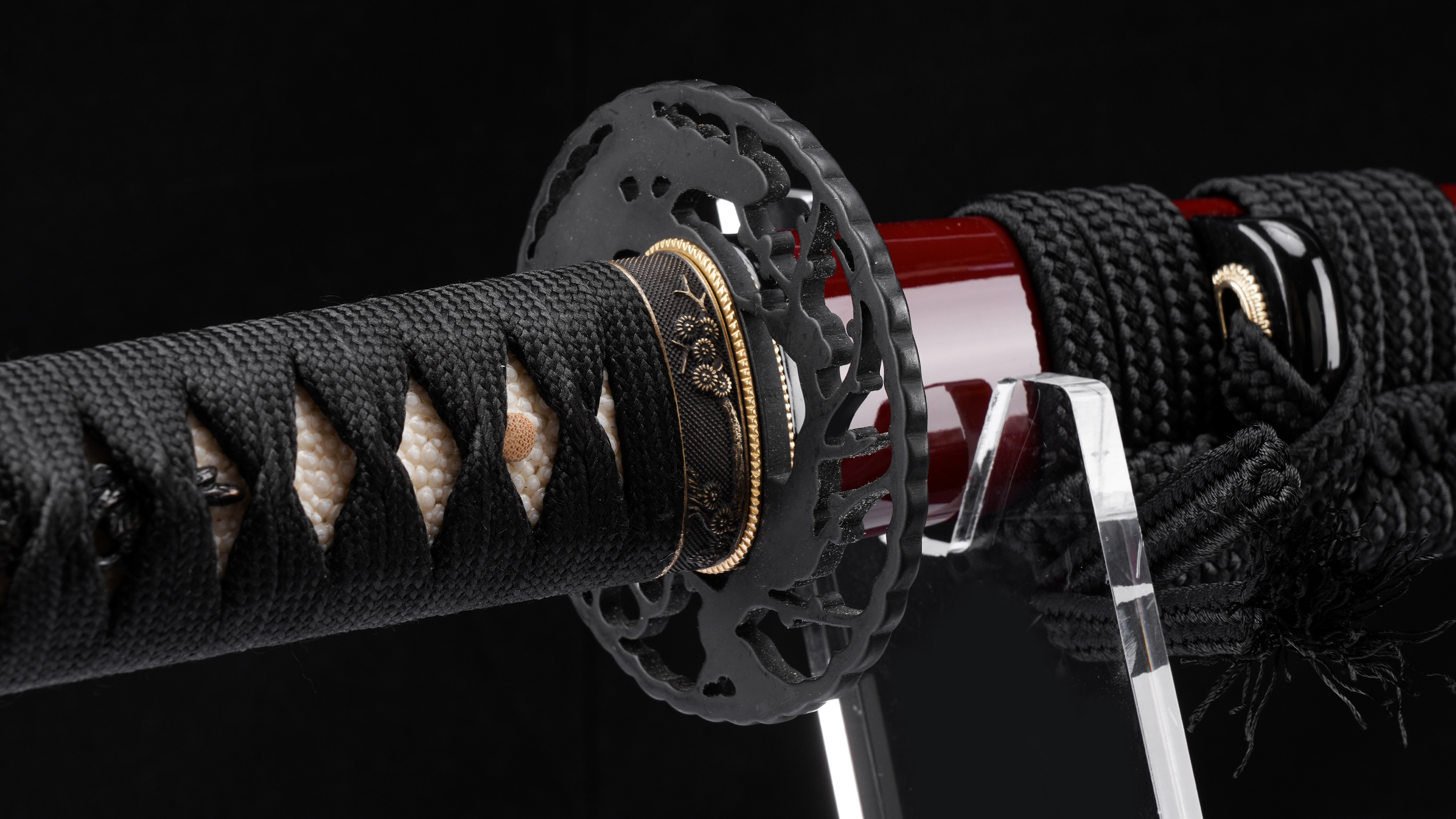
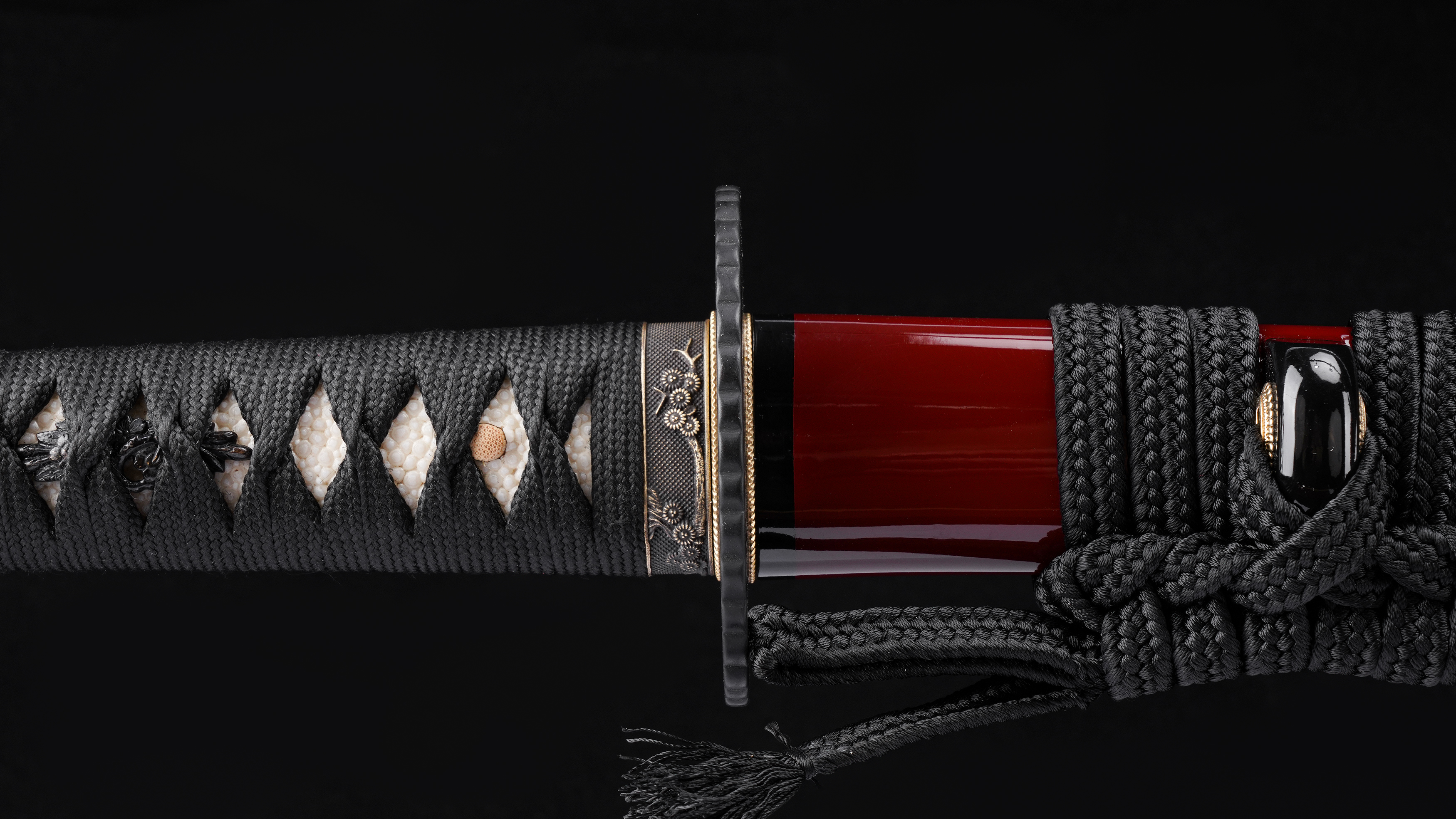
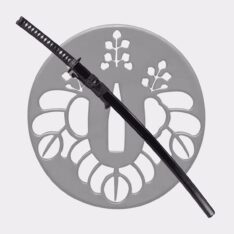
This katana comes equipped with blackened koshirae including an iron maru gata (round) sukashi (openwork) tsuba, as well as brass fuchi, kashira, and menuki with elaborate motifs, enhancing its visual appeal. Other fittings are brass seppa and habaki.
Following tradition, one mekugi secures the nakago to the wooden core Haichi style tsuka covered in white genuine samegawa. The tight tsukamaki is then wrapped using synthetic silk ito for a secure and durable grip.
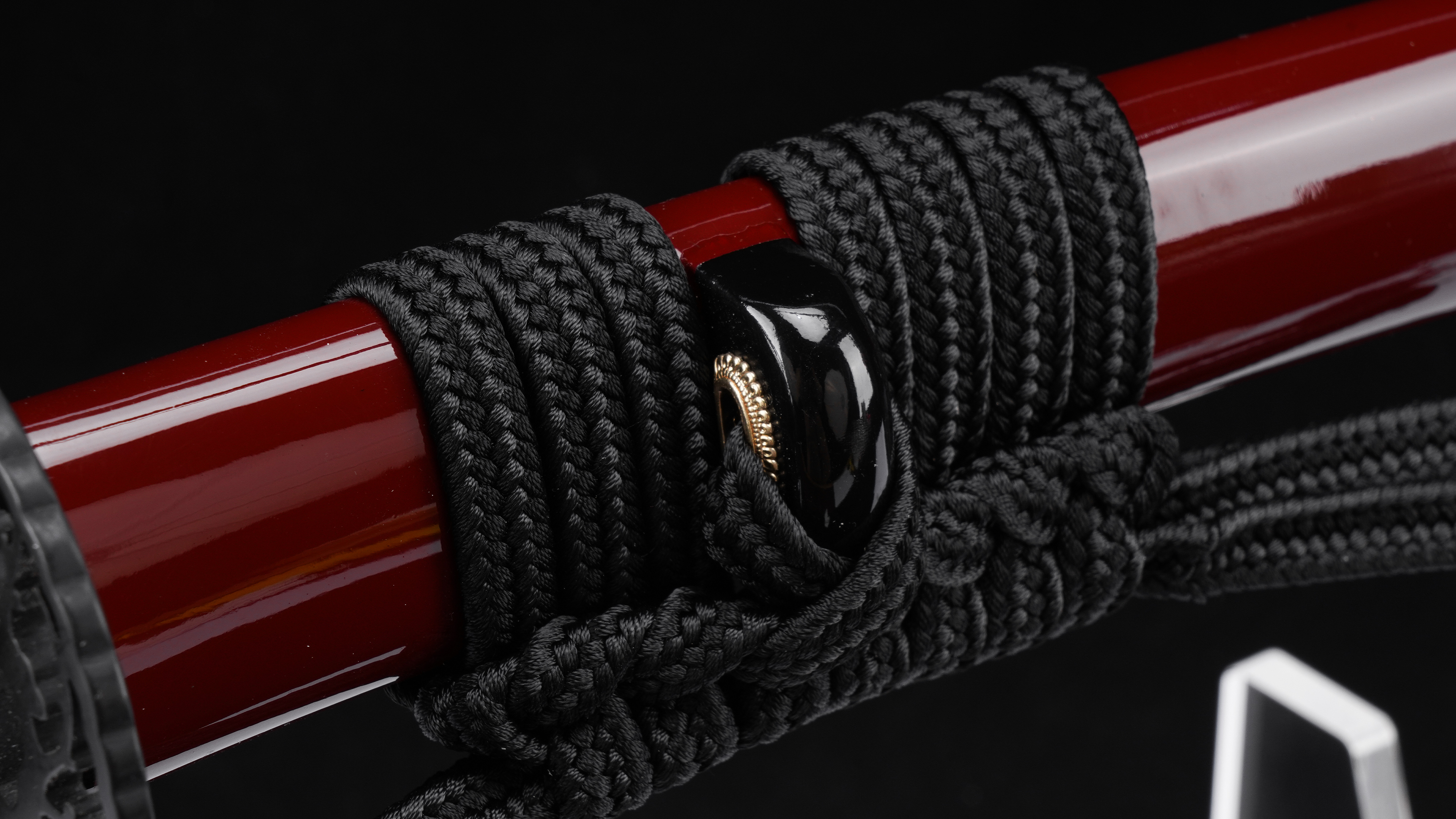
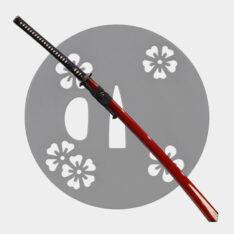
A glossy red oil-lacquered saya with brass shitodome and thickened sageo completes the overall ensemble.






 Ordering within the USA:
 Shipping outside of USA:


