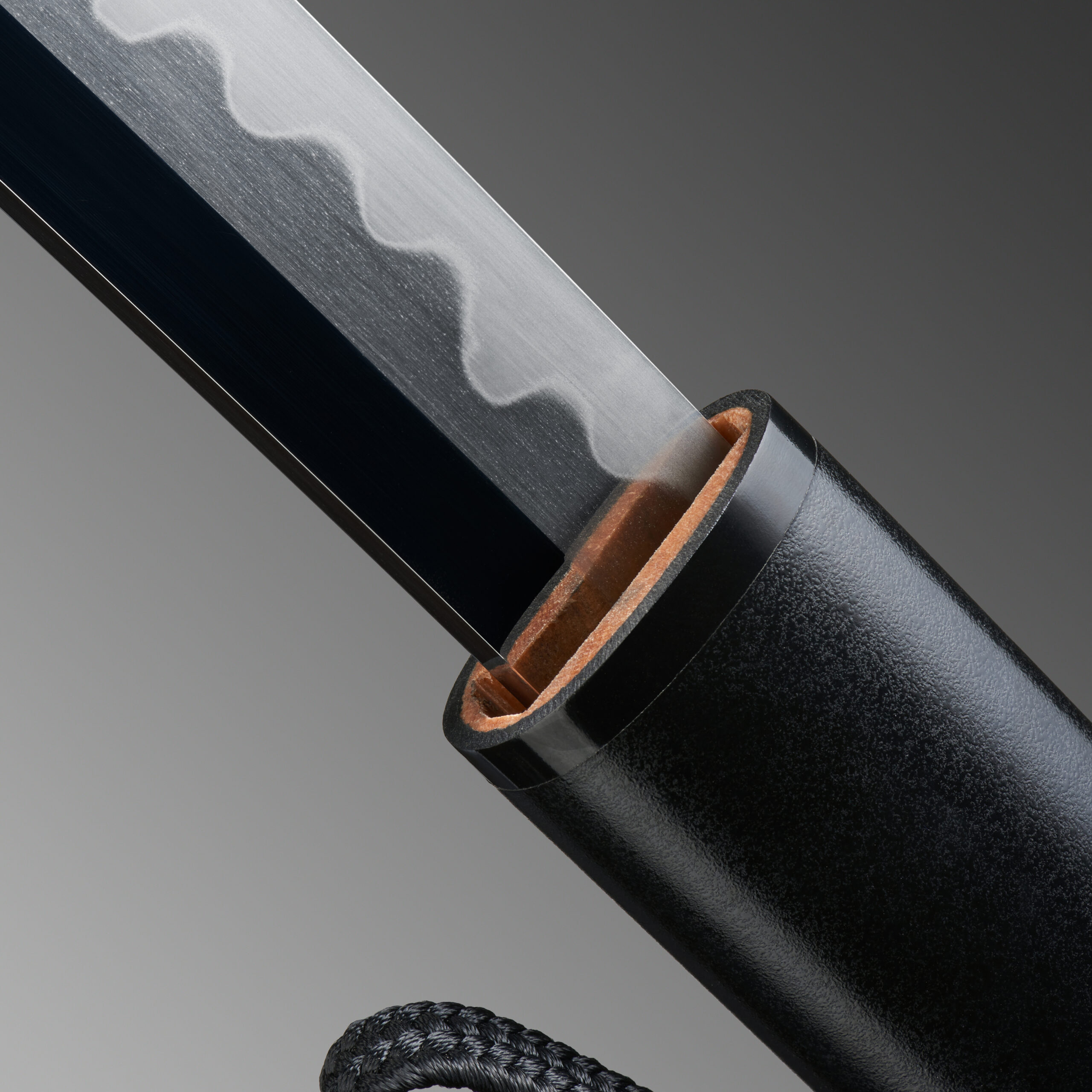
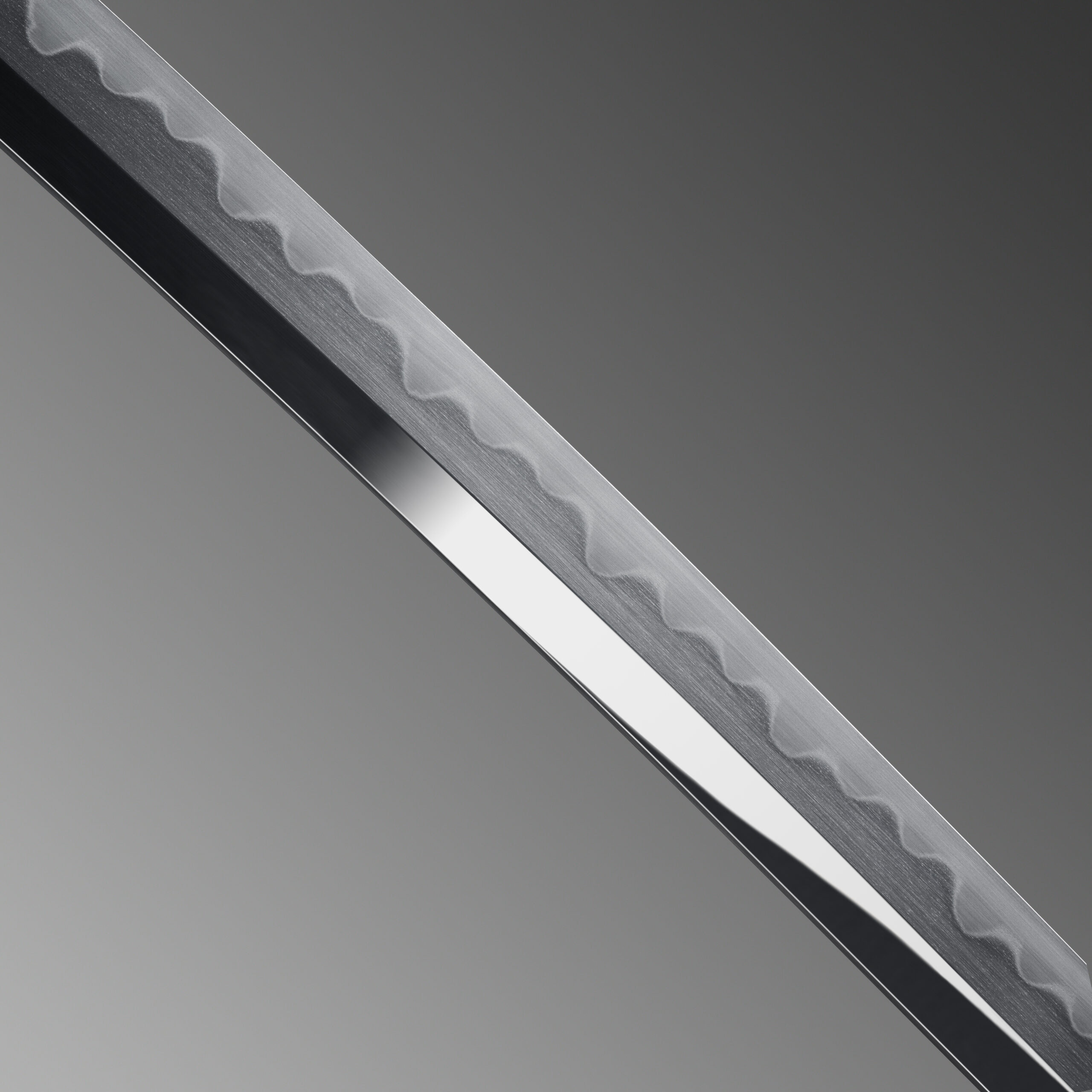
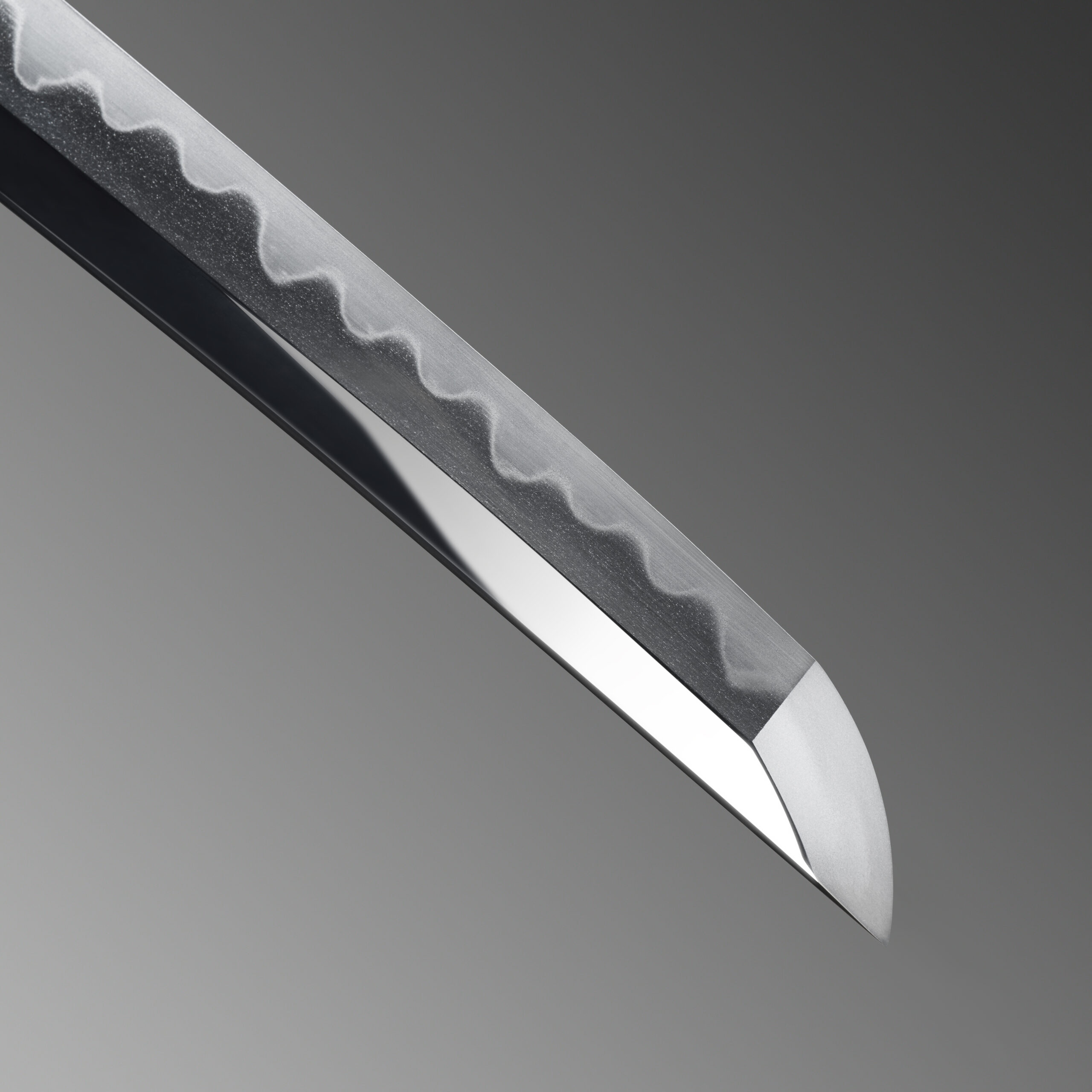
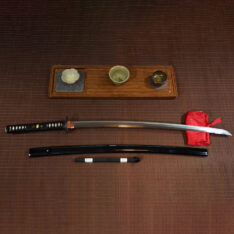
Shadow Dancer's Crucible Steel Sanbonsugi Clay Temper Sashikomi Polish Katana is an imposing piece, with a shinogi zukuri (ridge line runs along the blade’s length on both sides) blade forged from crucible steel. Differential heat treatment and traditional sashikomi polishing brings out the gorgeous jihada and sanbonsugi (reminiscent of three cedar trees) hamon for maximum visual appeal.
Three optional horimono (blade engravings) are available:
Horimono #1
In early Japanese history, plum blossoms were more celebrated than cherry blossoms, reflected in the Man’yōshū, one of Japan’s oldest poetry anthologies. Tenjin, the god of scholarship, is also strongly associated with plum trees, having composed a poem to a plum tree before his exile. Meanwhile, the dragon is an auspicious symbol representing power, wisdom, and protection. Together, this intricate horimono of a traditional Japanese three-clawed dragon coiled around a branch with blooming plum blossoms represents the balance of raw power with inner steadiness.
Horimono #2
Fudō Myōō, one of the Five Wisdom Kings in Japanese Esoteric Buddhism is often depicted with a sword in his right hand which severs worldly desires, while the kensaku (rope) in his left hand embodies compassion. This horimono is of Fudō’s sacred sword known as the sankoken (三鈷剣), depicted with a three pronged hilt. Combined with the Bonji seed-syllable, the horimono functions almost as a devotional inscription, representing Fudō Myōō himself.
Horimono #3
This horimono of a dragon coiled around a sword is essentially a summary of the legend where Fudō Myōō was challenged to a duel by a non-Buddhist heretic. As the fight reached a standstill after both opponents transformed into swords, Fudō changed into Kurikara, a golden dragon, and coiled around his opponent’s blade, threatening to swallow it from the tip and winning the battle.
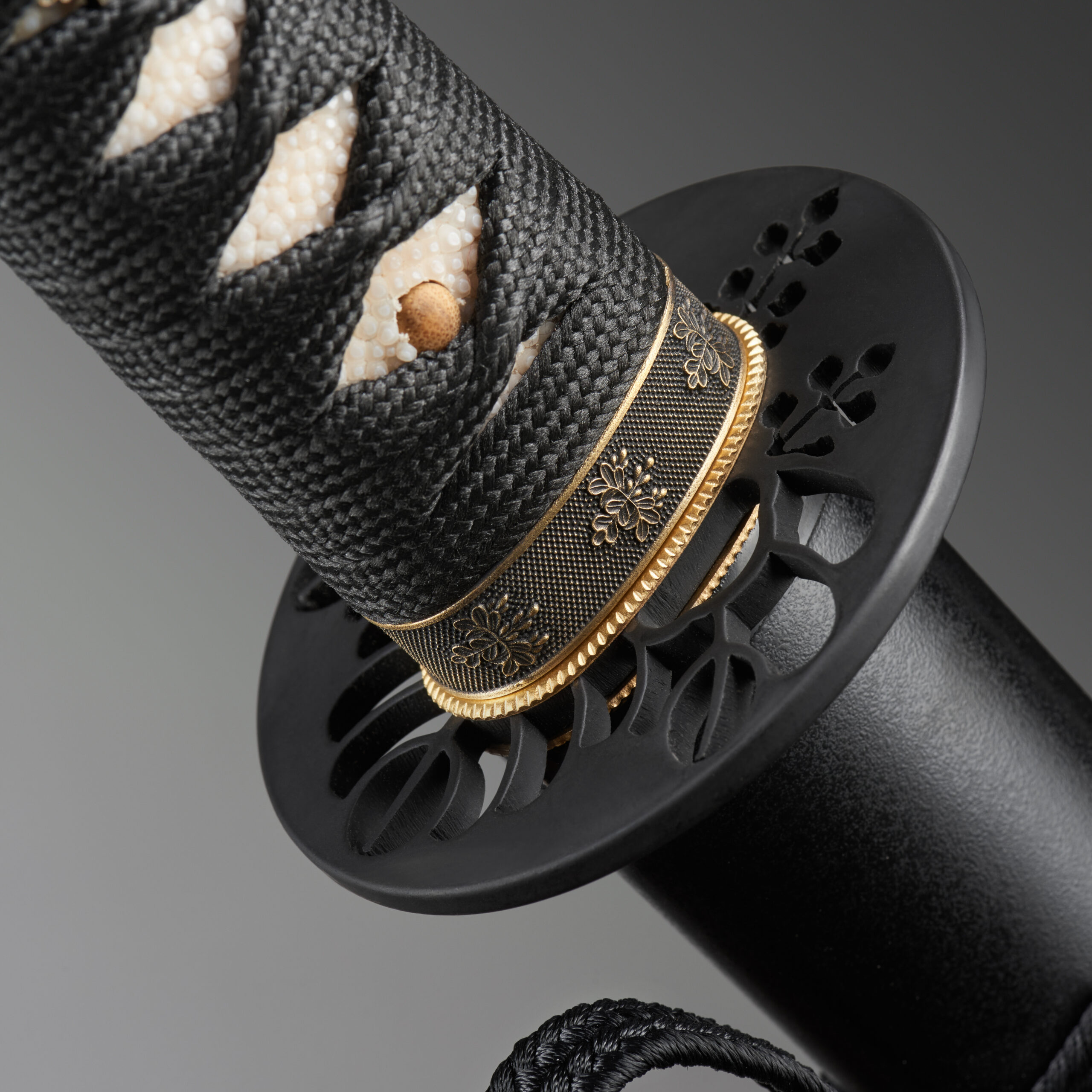
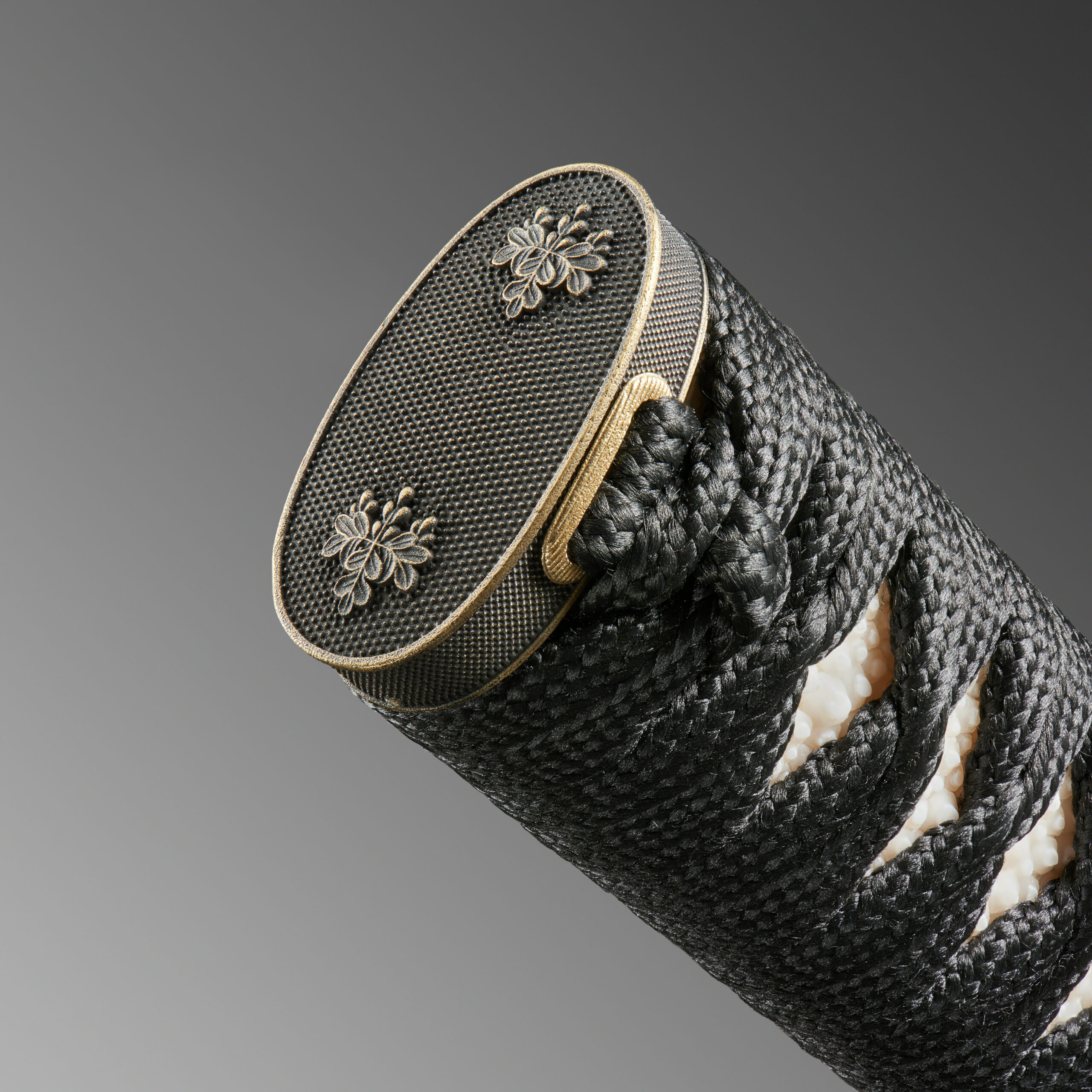
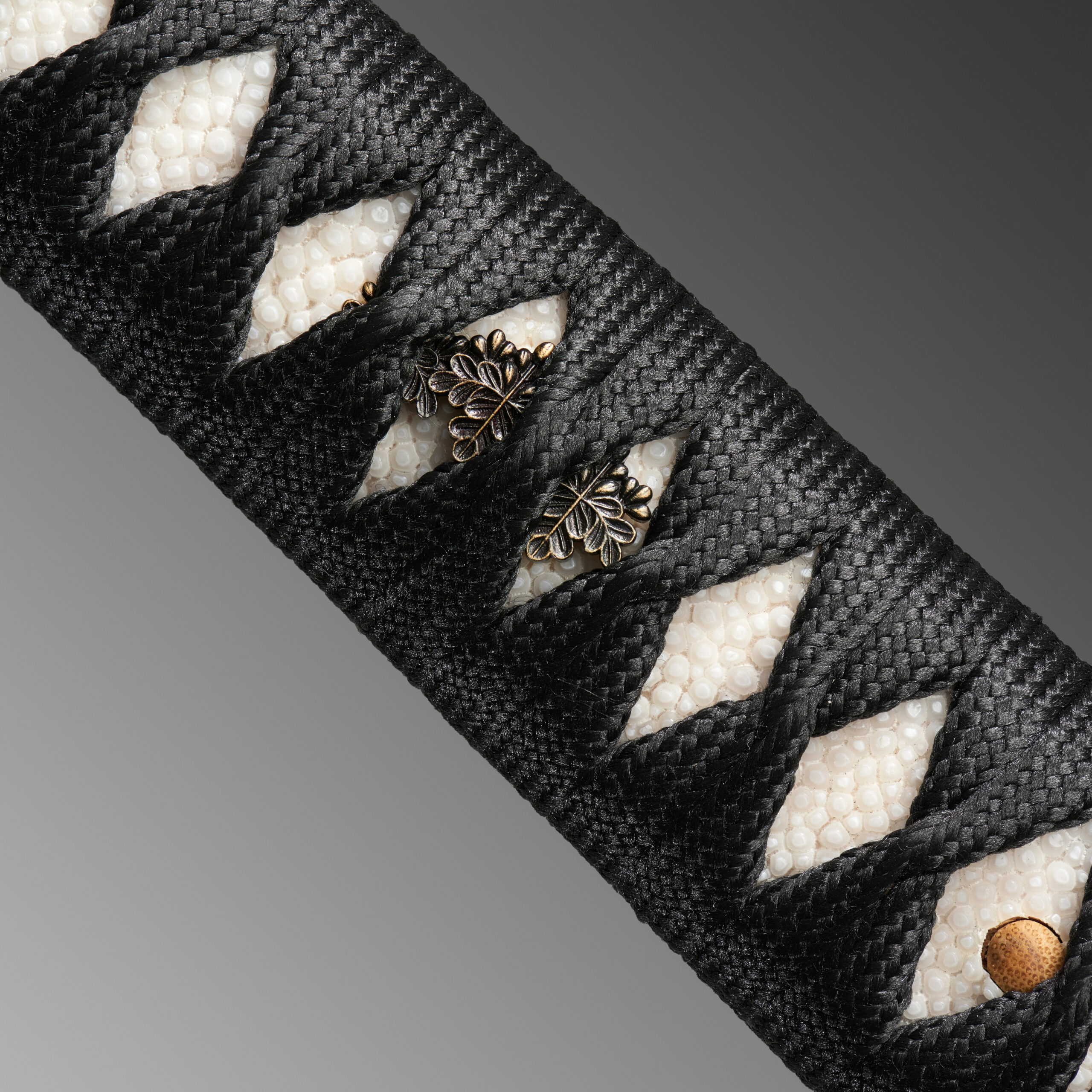
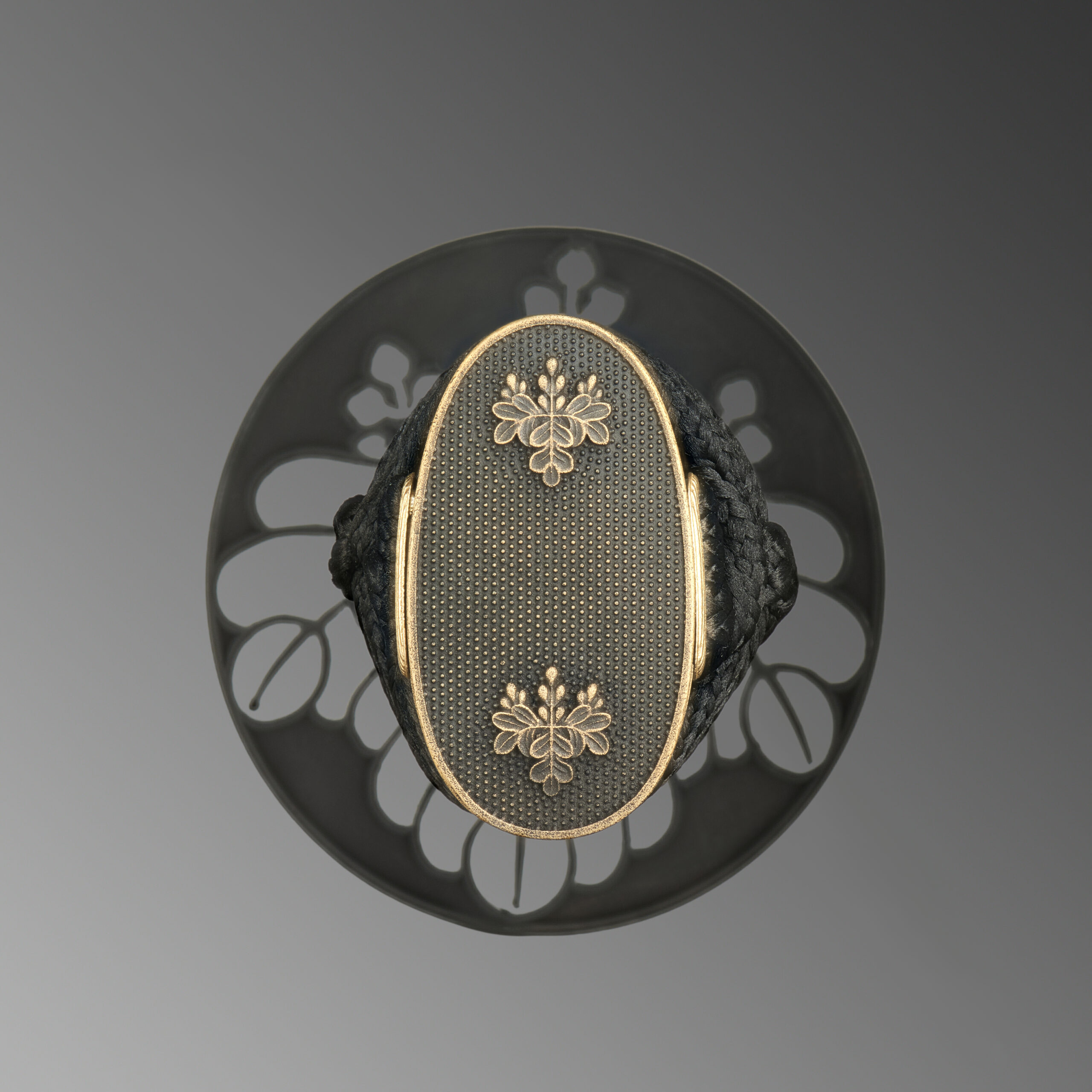
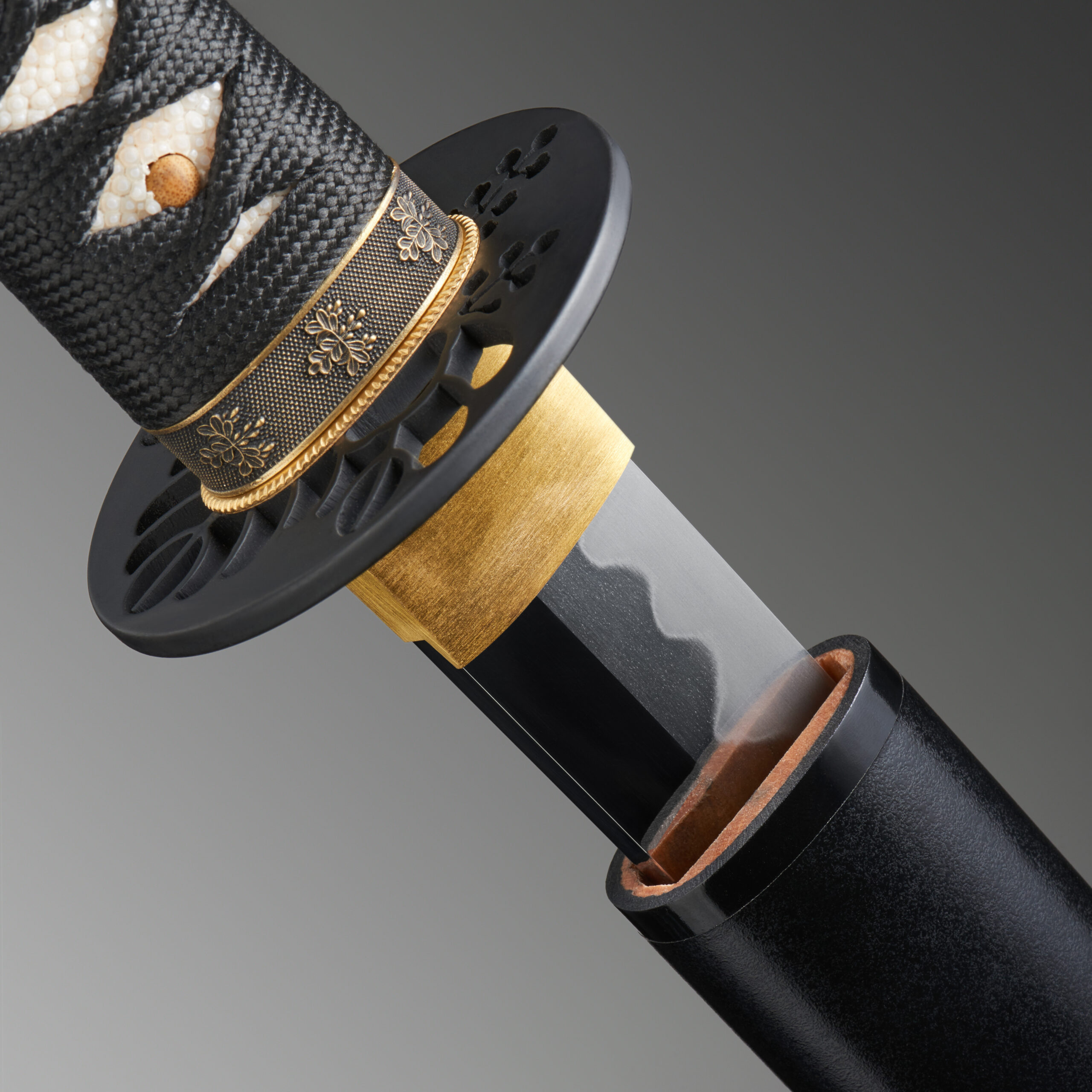
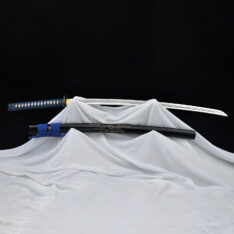
This katana’s premium blackened fittings with gold accents includes an iron maru gata (round) sukashi (openwork) tsuba, brass fuchi, kashira, and menuki, all with the kiri (paulownia) crest. Historically reserved as a prestigious symbol for the Japanese Emperor and the Imperial Family, the crest was later bestowed upon those who displayed supreme loyalty. Today, the kirimon remains an internationally recognized emblem used by the Japanese government and Prime Minister. Much detail has been poured into this katana’s design, as evidenced by the uniform bumps on the fuchi and kashira, forming a classic texture called nanako-ji (fish-egg pattern). Gold-toned brass seppa and habaki complement the overall design.
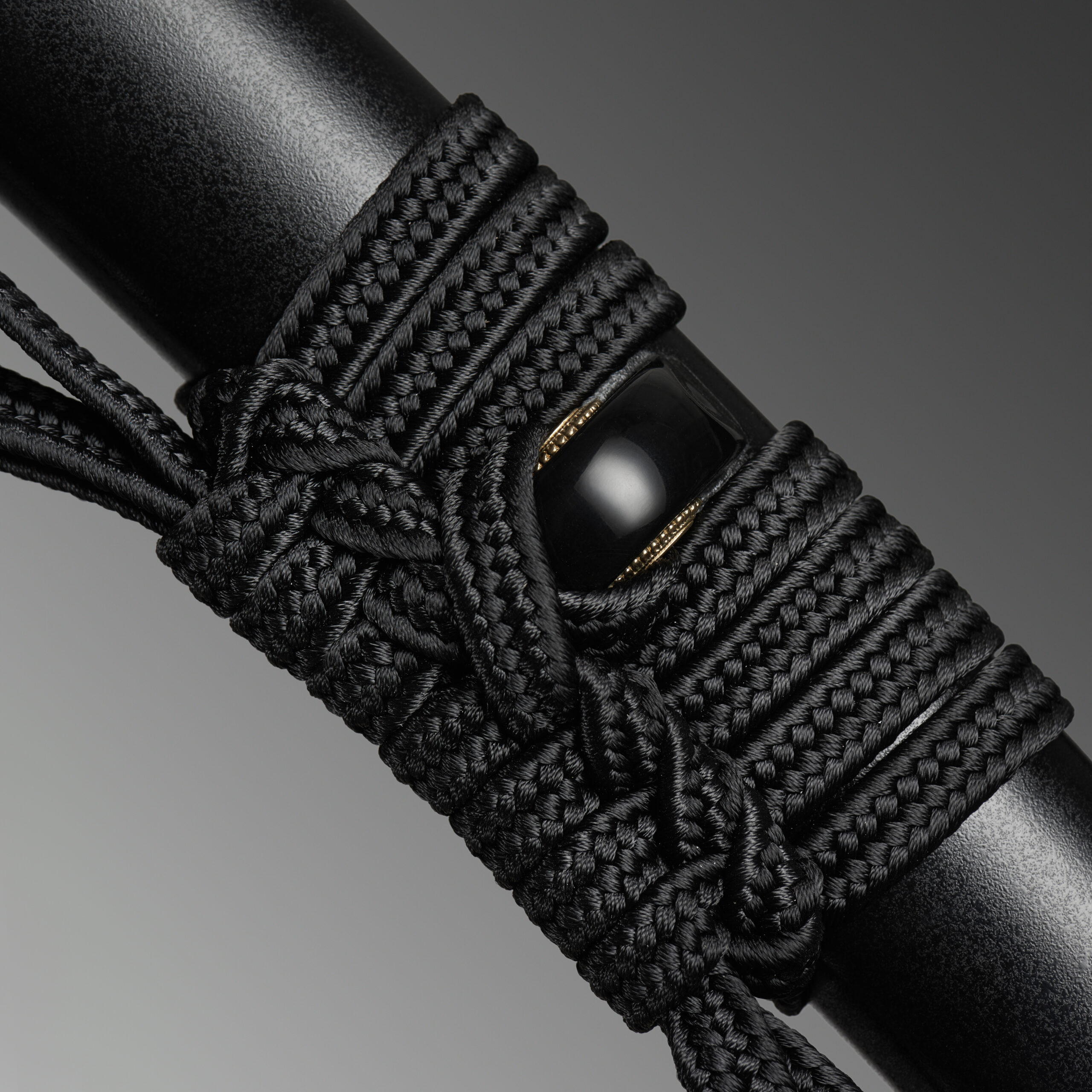
The full tang blade is secured to the wooden haichi-style tsuka with one mekugi. White genuine samegawa as the foundational covering of the hilt, wrapped tightly using synthetic silk ito for a firm and long-lasting grip.
A black oil lacquered saya with brass shitodome, paired with a thickened sageo, completes this katana.






 Ordering within the USA:
 Shipping outside of USA:


