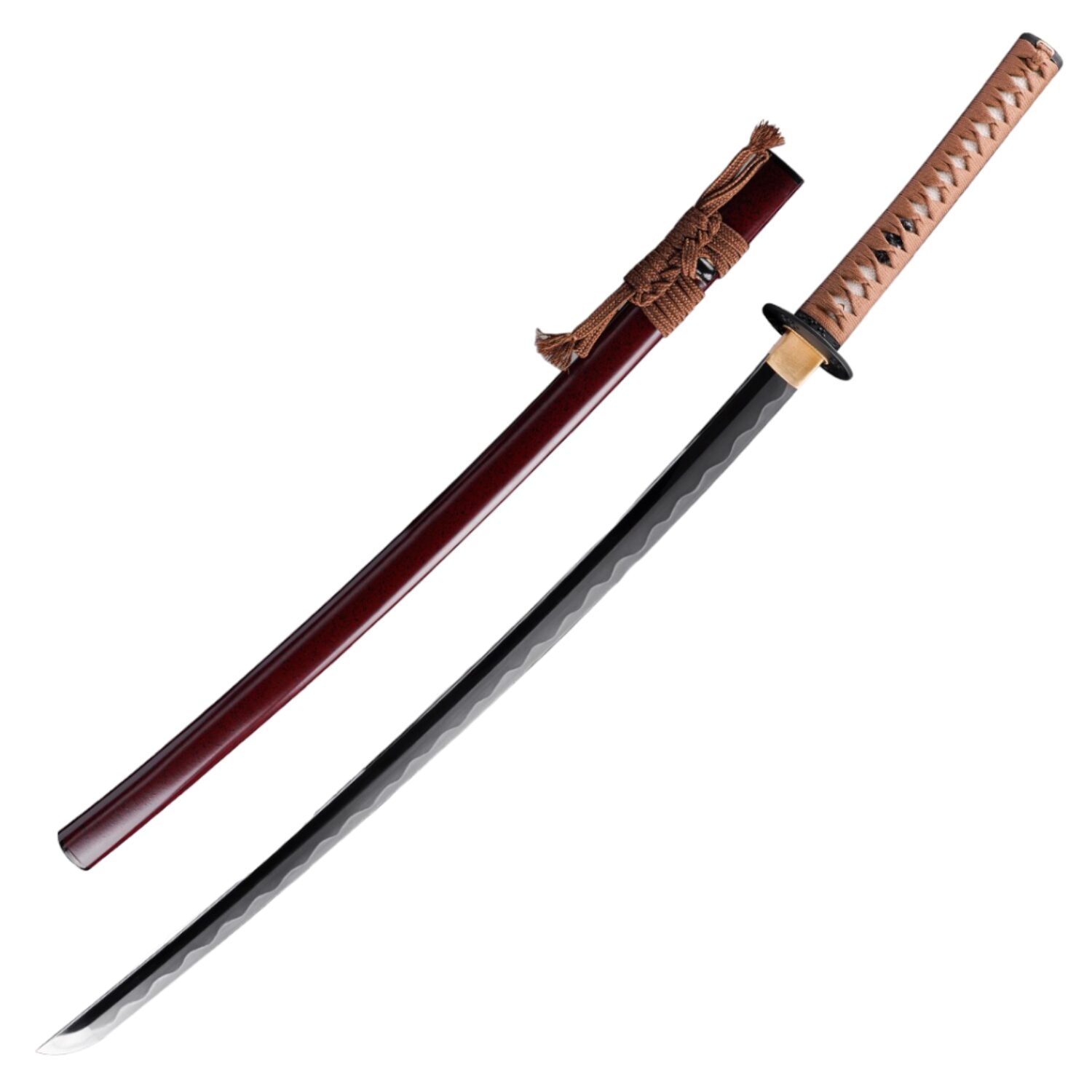
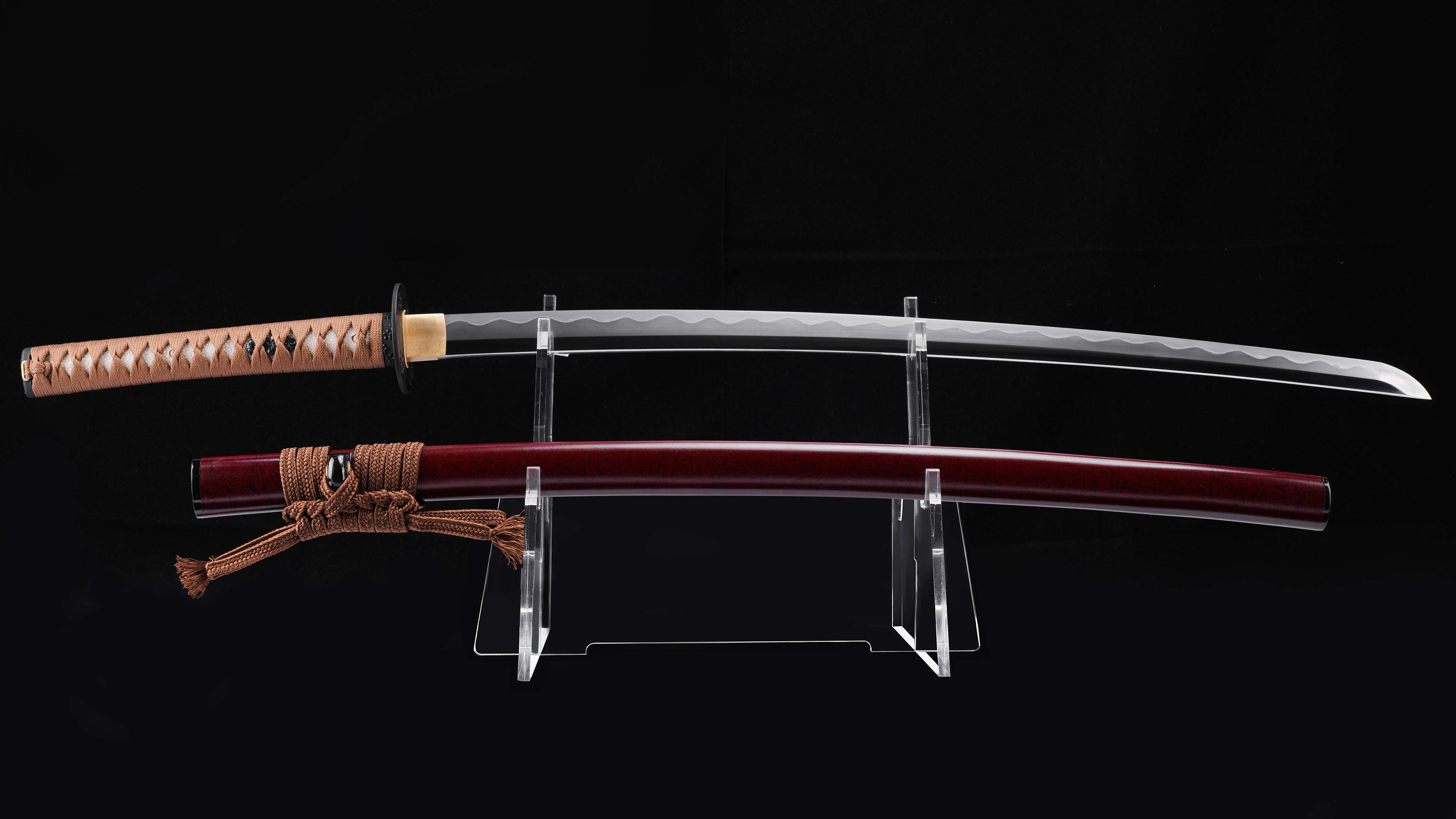
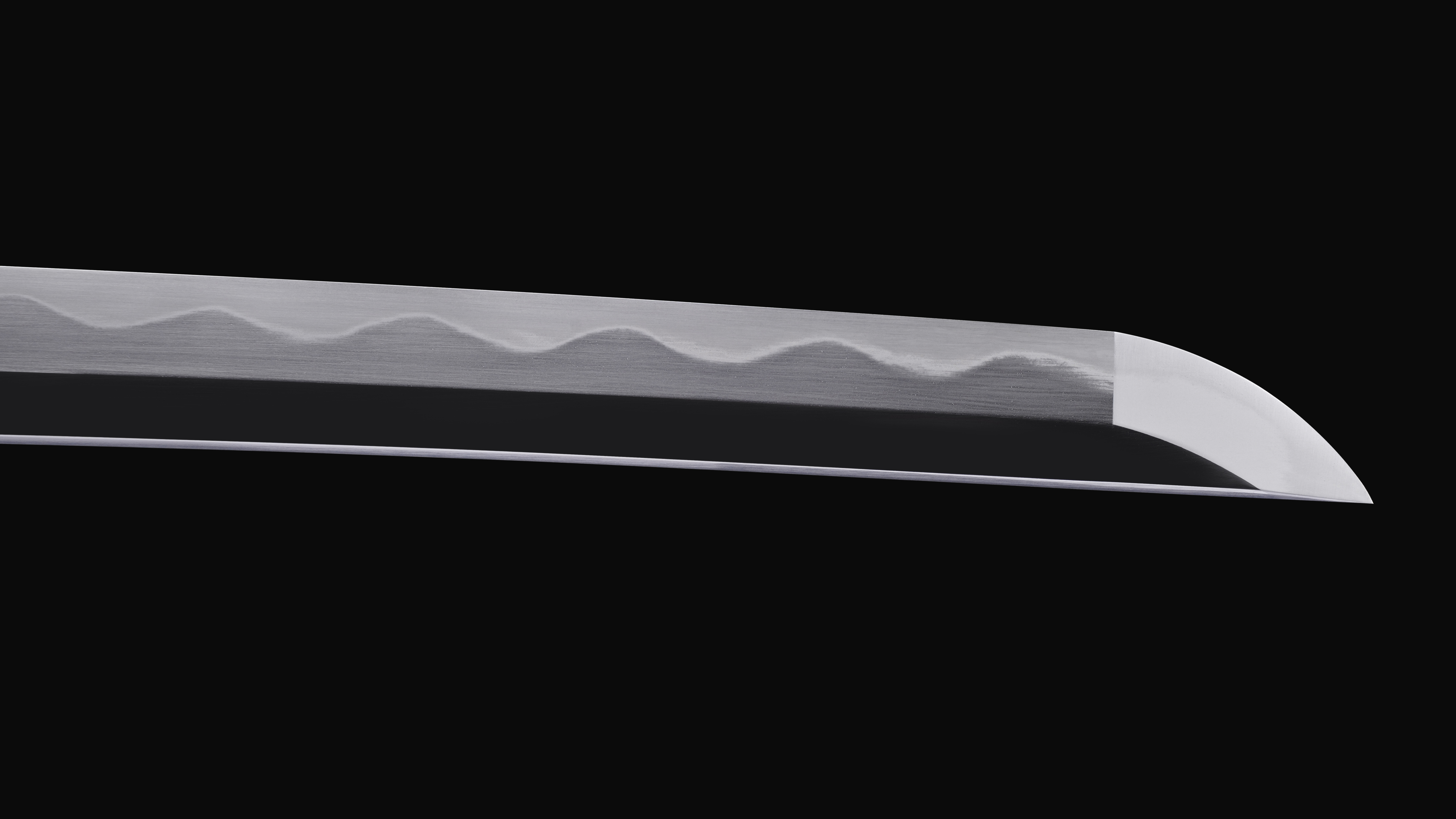
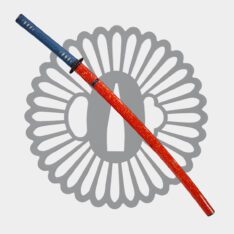
This Shadow Dancer Katana is an imposing piece, with a shinogi zukuri (ridge line runs along the blade’s length on both sides) blade forged from crucible steel, differentially hardened, clay tempered, and Sashikomi polished to reveal a beautiful gunome (waves) hamon.
The blade is available without horimono (blade engravings) or with the choice of three different designs:
Horimono #1
Highly intricate and detailed, this horimono of a full-length dragon coiled around a branch of blooming plum blossoms brings a sense of harmony. Masters over the rains and oceans, the three-clawed dragon represents wisdom, power, and protection. Meanwhile, the plum blossom is celebrated as it blooms late in the winter, symbolising endurance and strength. Together, the dragon’s raw power and the plum blossom’s quiet endurance remind warriors that true strength includes patience.
Horimono #2
Exhibiting a Bonji character and a sword with a three-pronged hilt, this horimono depicts the sankoken (三鈷剣), associated with Fudō Myōō, one of the Five Wisdom Kings in Japanese Esoteric Buddhism. This sword of wisdom which cuts through ignorance and delusion, paired with the Bonji character, functions almost as a devotional inscription representing Fudō Myōō himself.
Horimono #3
Featuring a dragon coiled around a sword blade with a three-pronged vajra hilt, known as a sankoken (三鈷剣), a sacred weapon of Fudō Myōō, a fierce and powerful deity in Japanese Esoteric Buddhism. This horimono depicts the legend where Fudō Myōō was challenged by a non-Buddhist heretic. Both transformed into swords and fought to a standstill until Fudō Myōō transformed into the golden dragon Kurikara, coiling around his opponent’s blade, threatening to devour it from the tip, and thus, claimed victory.
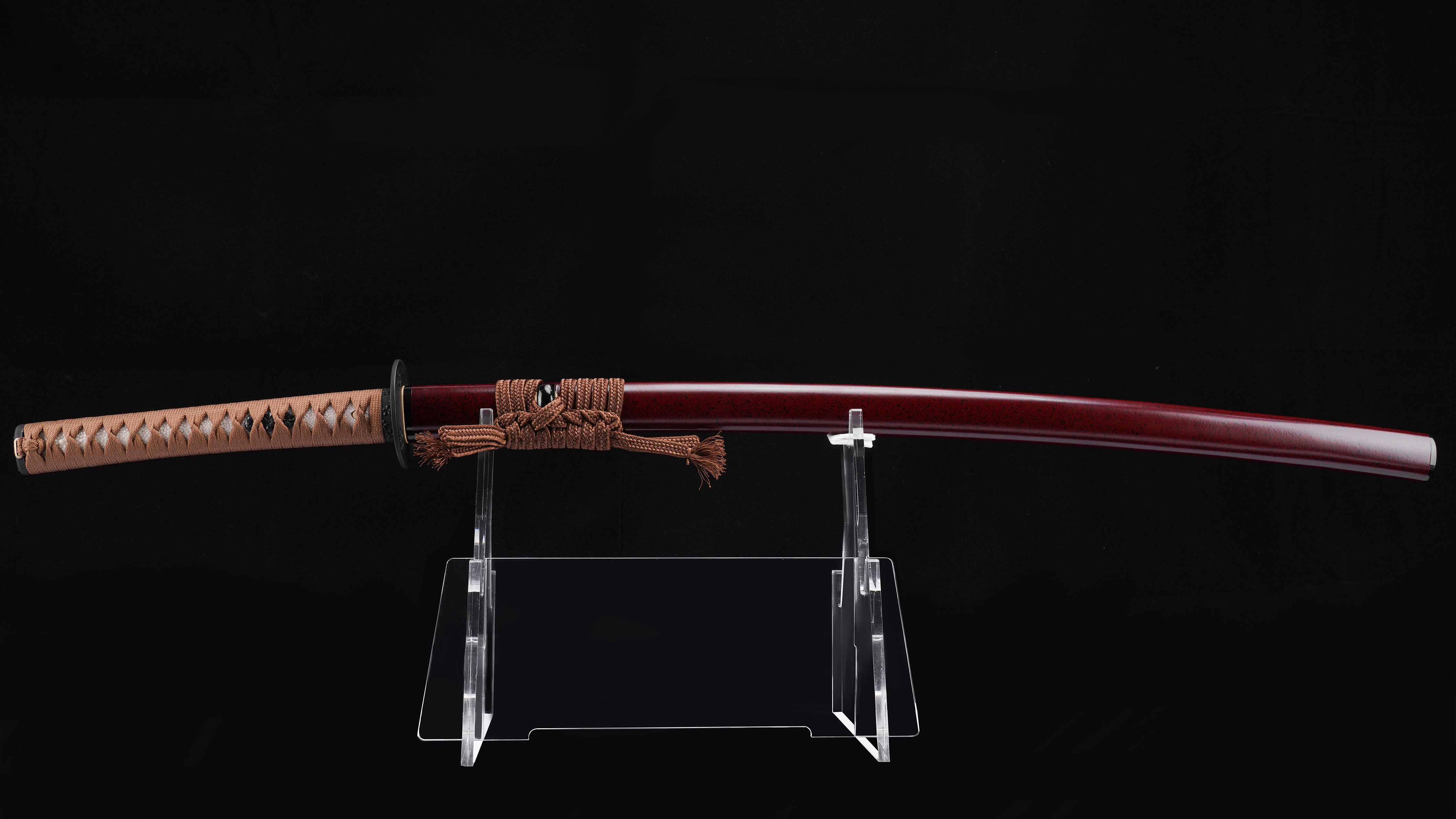
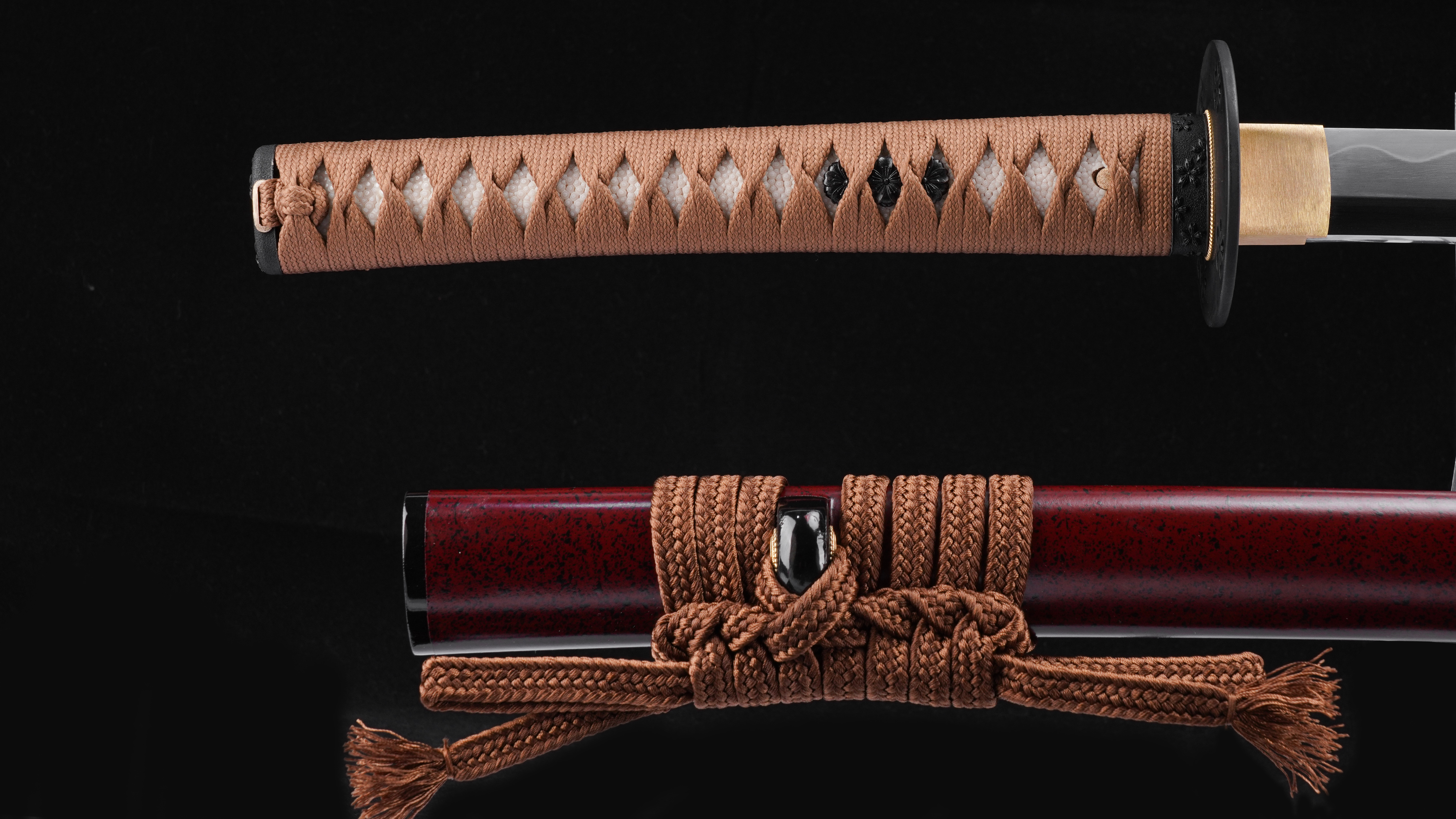
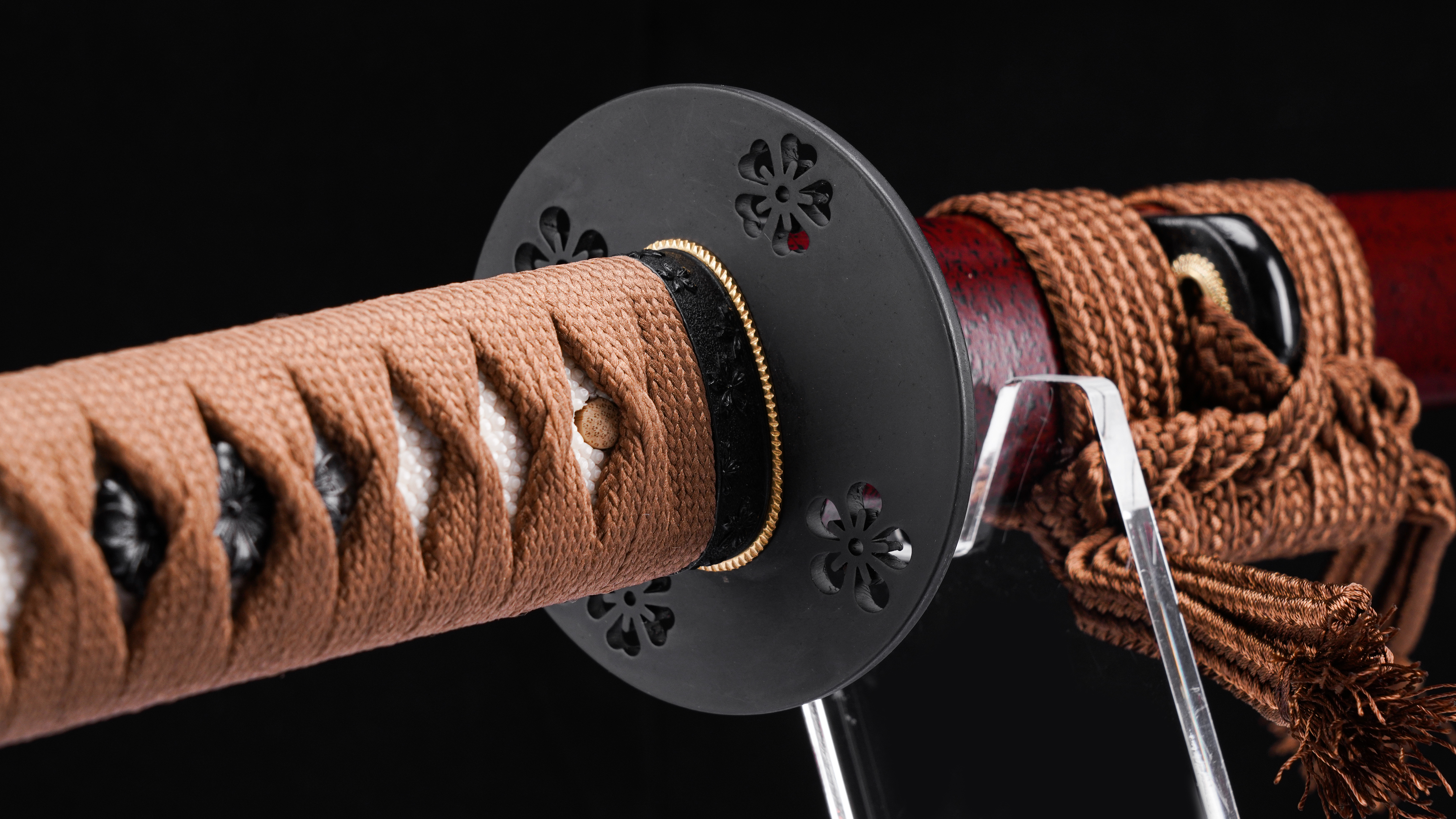
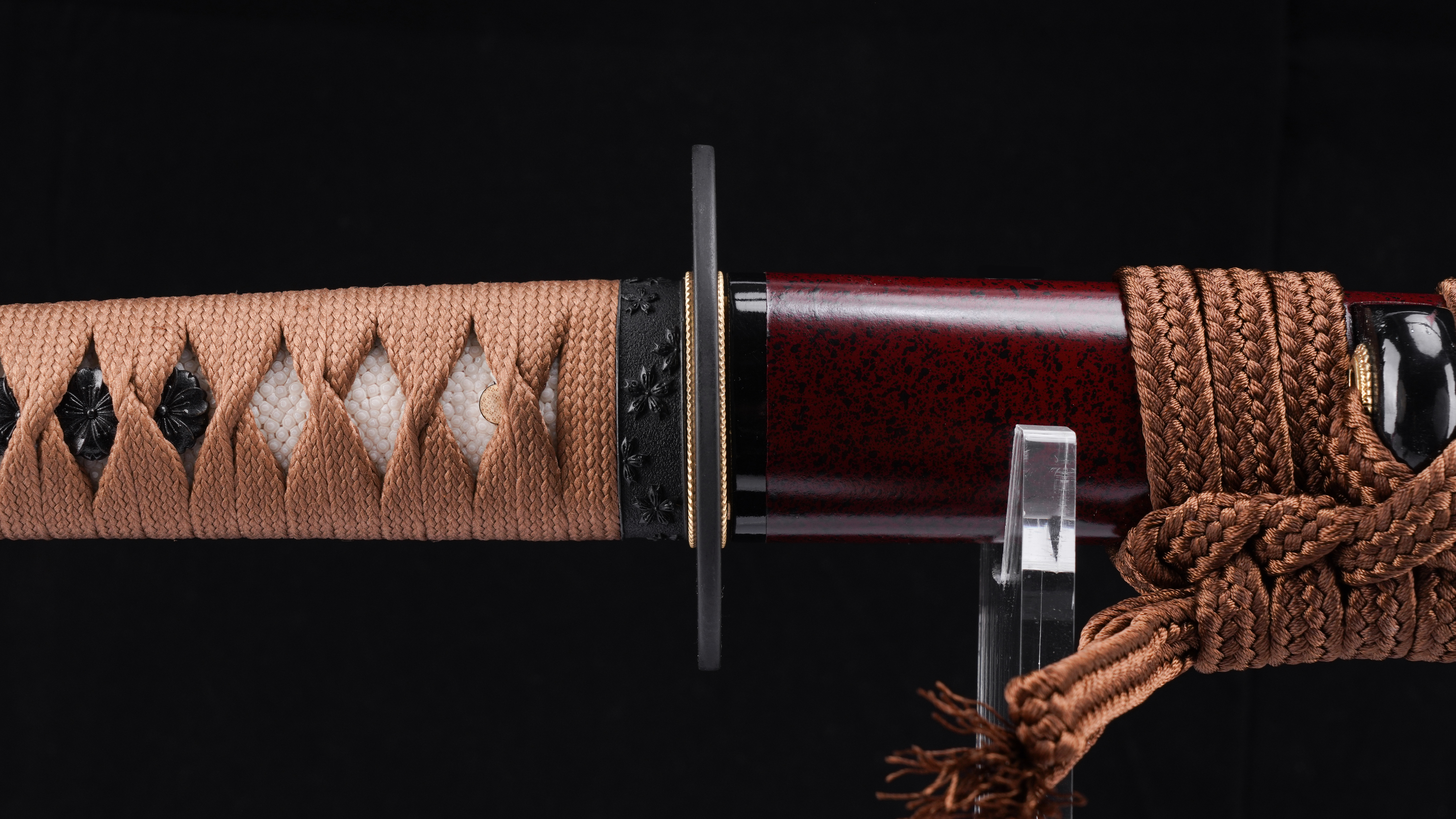
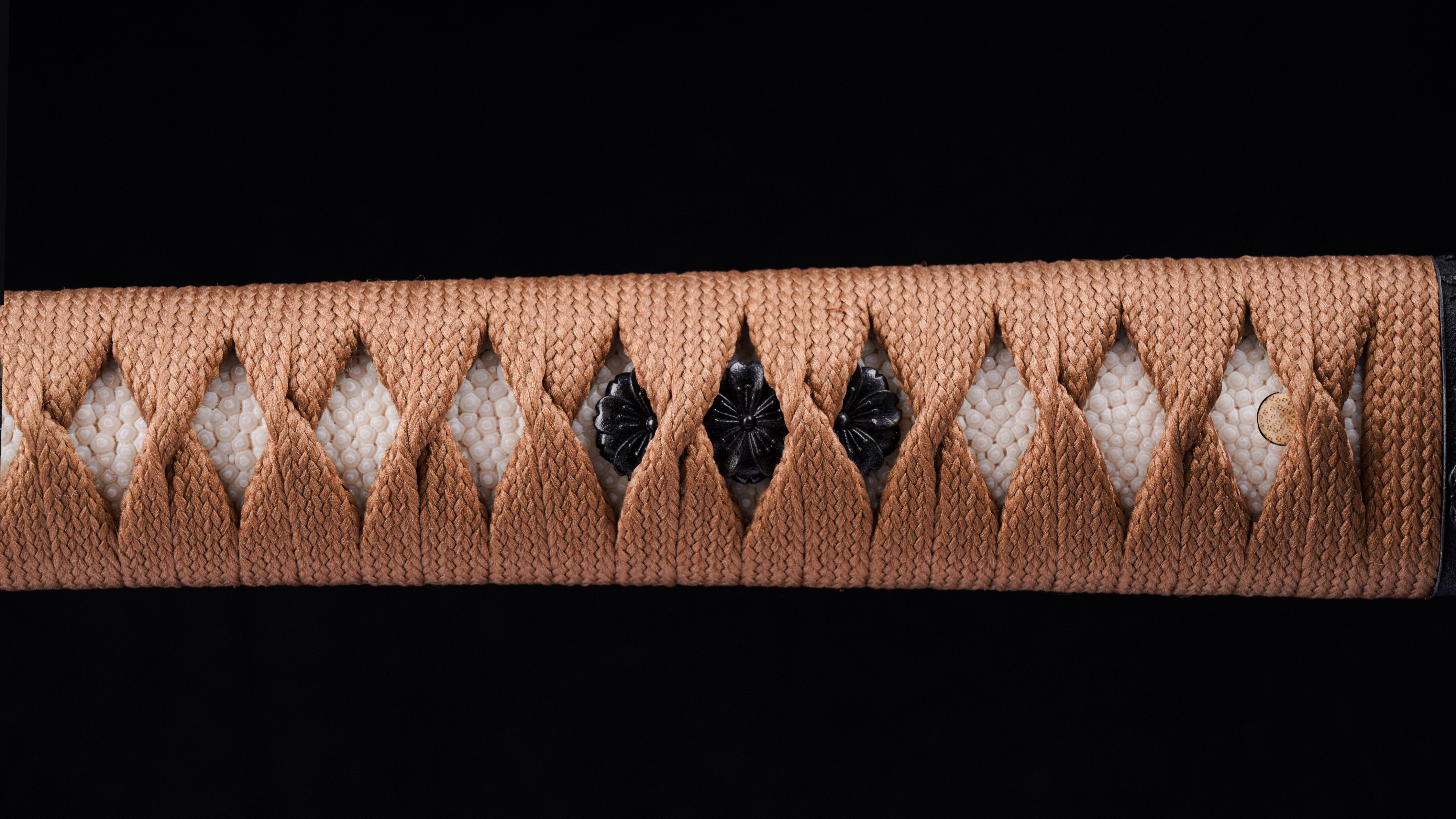
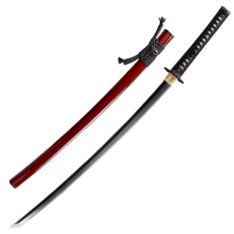
This katana comes equipped with premium blackened koshirae, including an iron maru gata (round) tsuba, brass fuchi, kashira, and menuki with cherry blossoms which bloom brilliantly before falling, reminding warriors of the fleeting but brilliant nature of life. Brass seppa and habaki complement the overall design.
The wooden Haichi style tsuka is first covered with white genuine samegawa and wrapped with synthetic silk ito. One mekugi secures the nakago to the handle, which includes hishigami, small folded paper wedges placed under the tsuka-maki wrap to uphold its shape and provide a firmer grip.
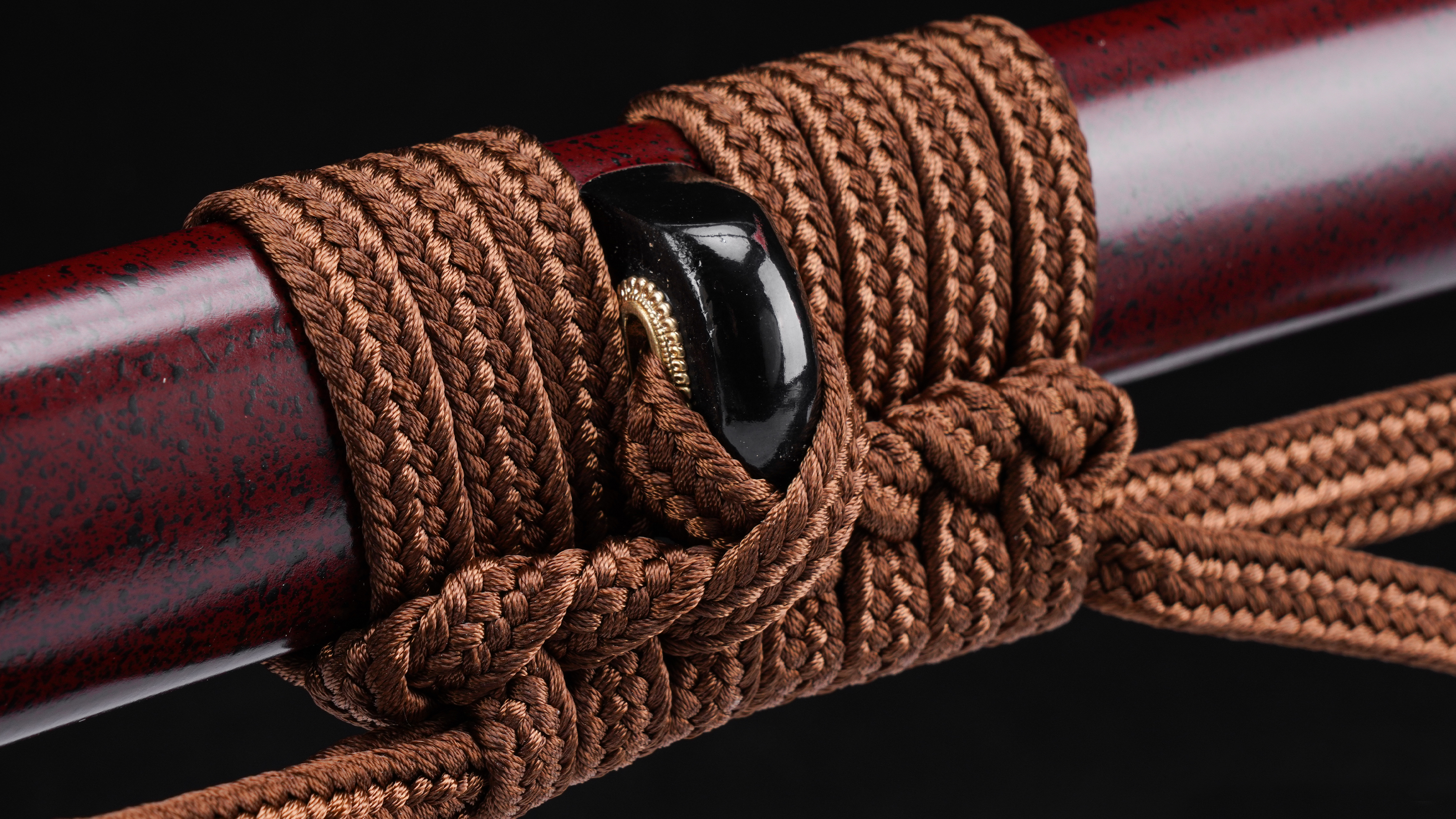
The overall design of the katana is completed with an oil lacquered saya mounted with brass shitodome and thickened sageo.






 Ordering within the USA:
 Shipping outside of USA:


