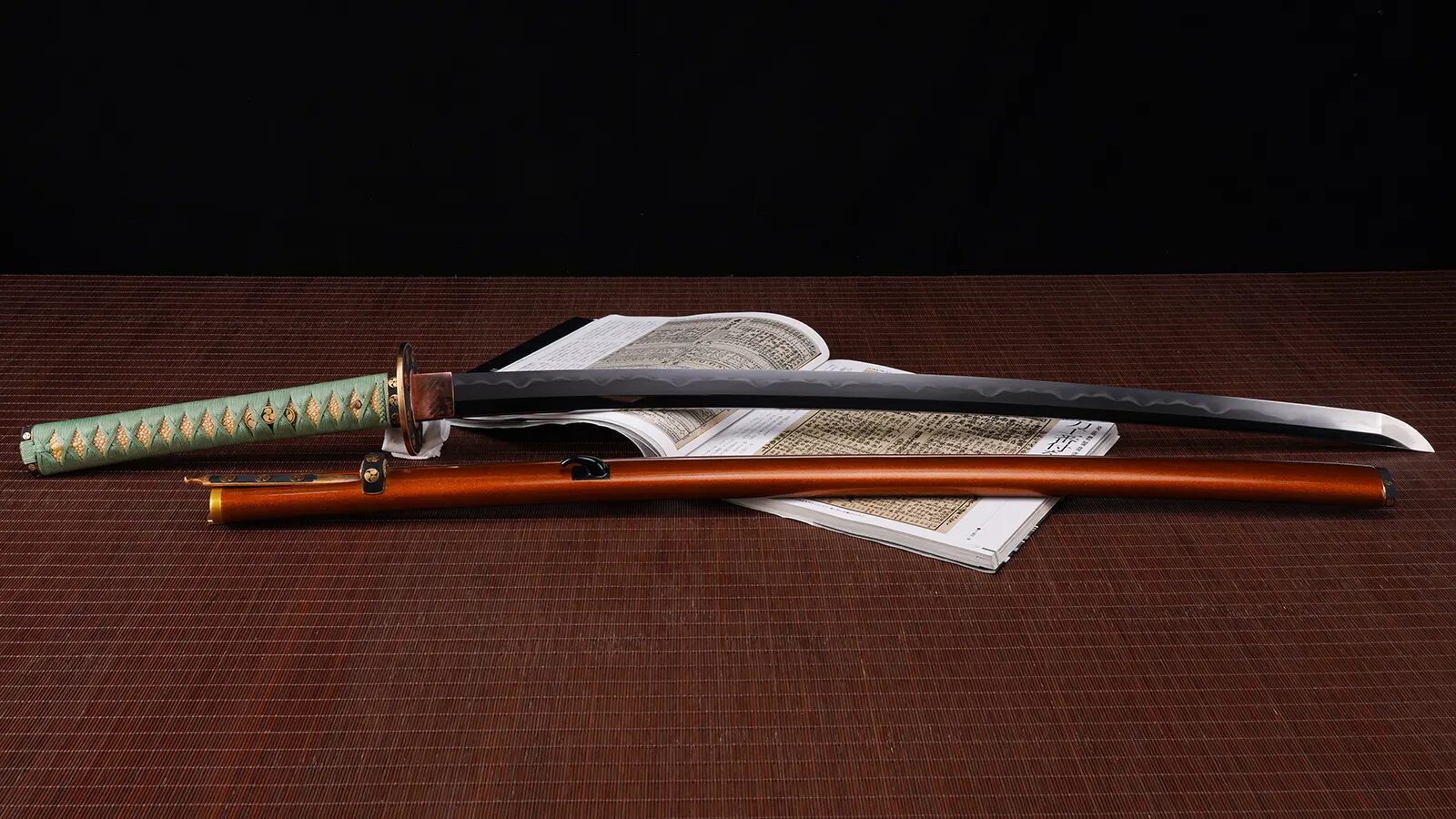
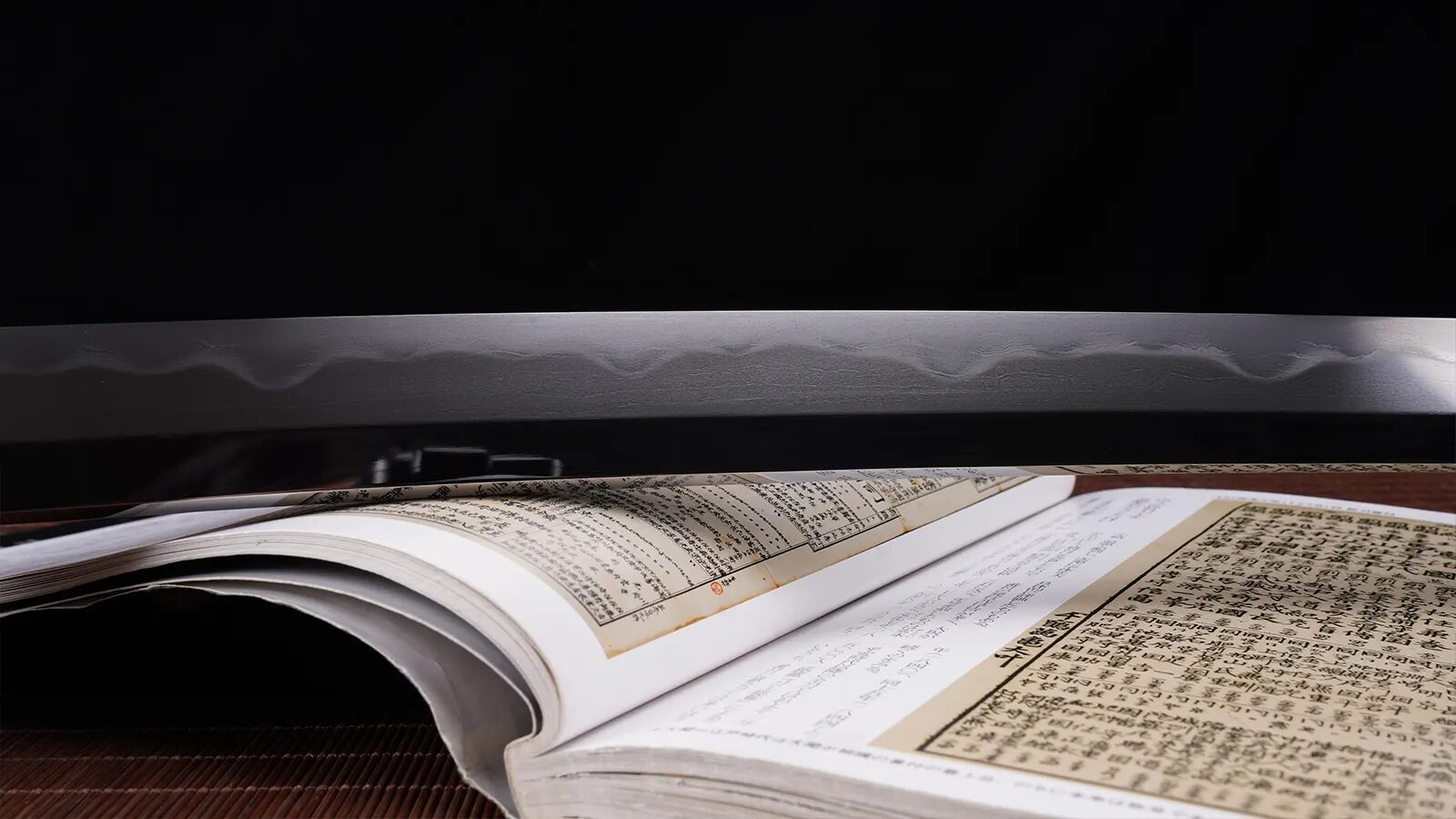
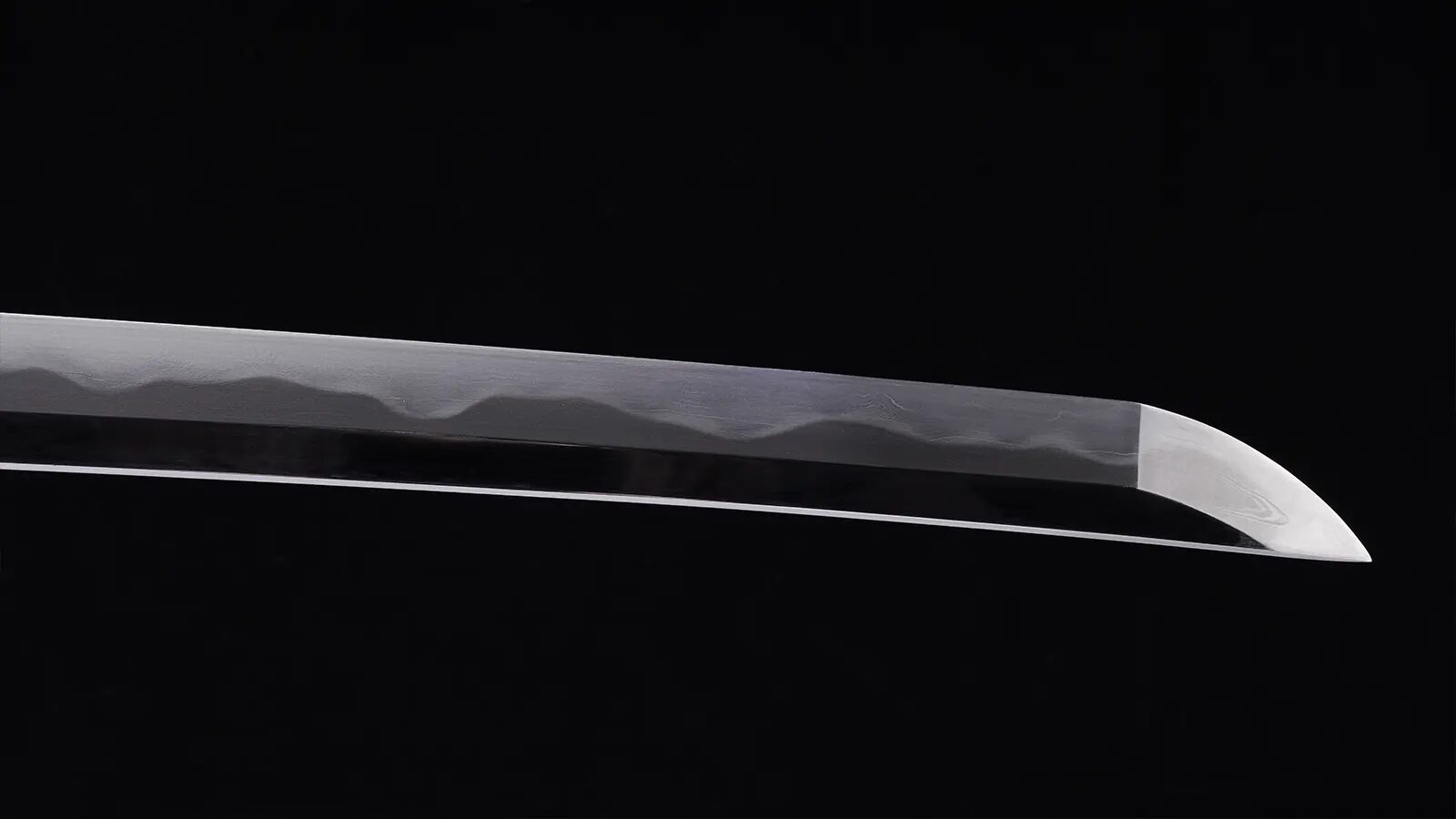
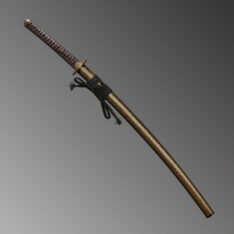
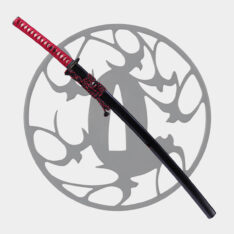
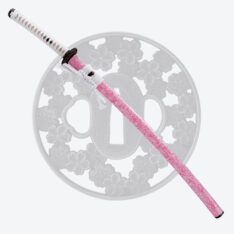
This beautiful Shadow Dancer katana carries much history and culture. Its shinogi zukuri (ridge line runs along the blade’s length on both sides) blade is forged from tamahagane steel, a material made from iron sand. It is then differentially heat treated and clay tempered to produce a blade with a keen, long lasting edge while the spine remains more resilient. This process also brings to life the stunning jihada and sanbonsugi (reminiscent of three cedar trees) hamon further accentuated through traditional sashikomi polishing.
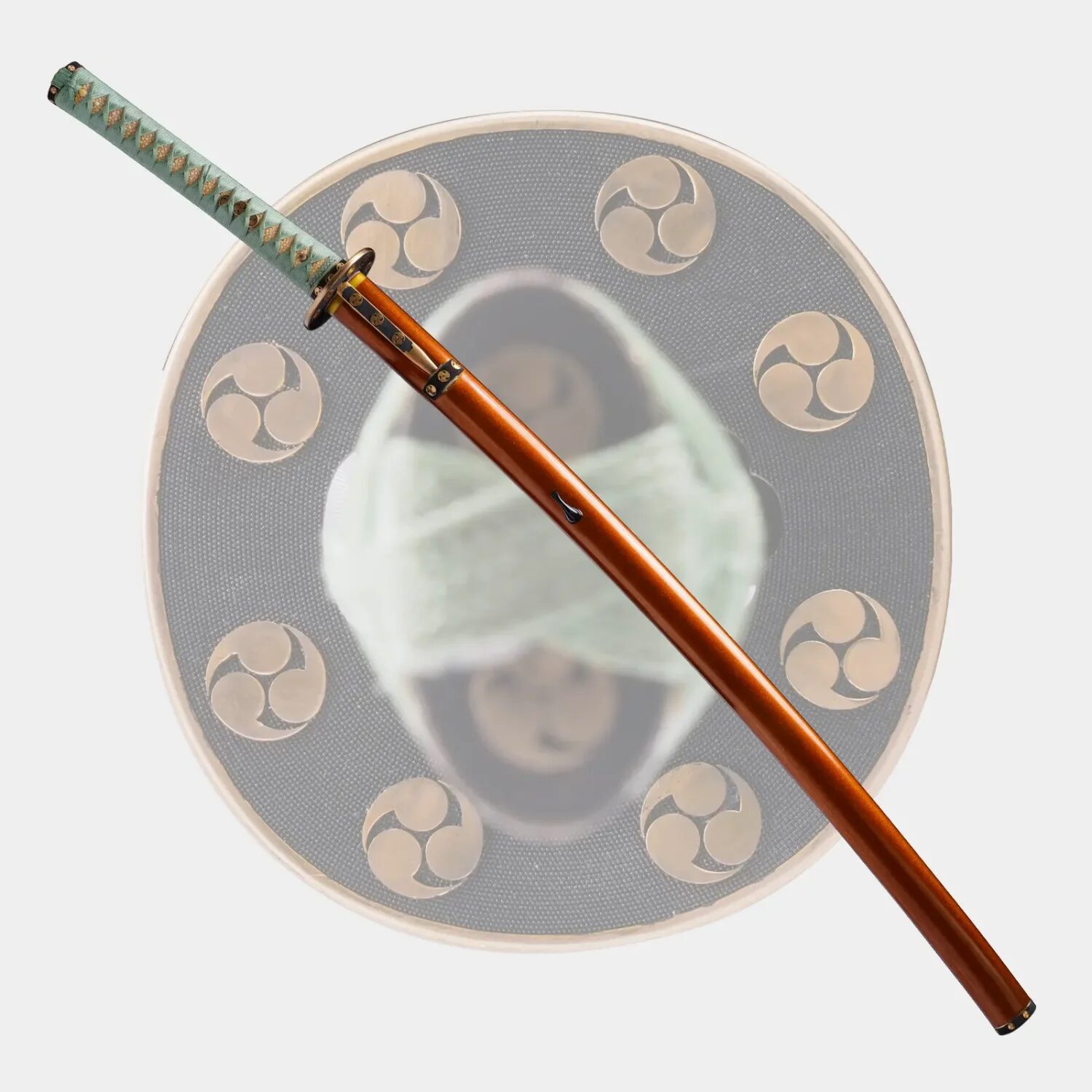
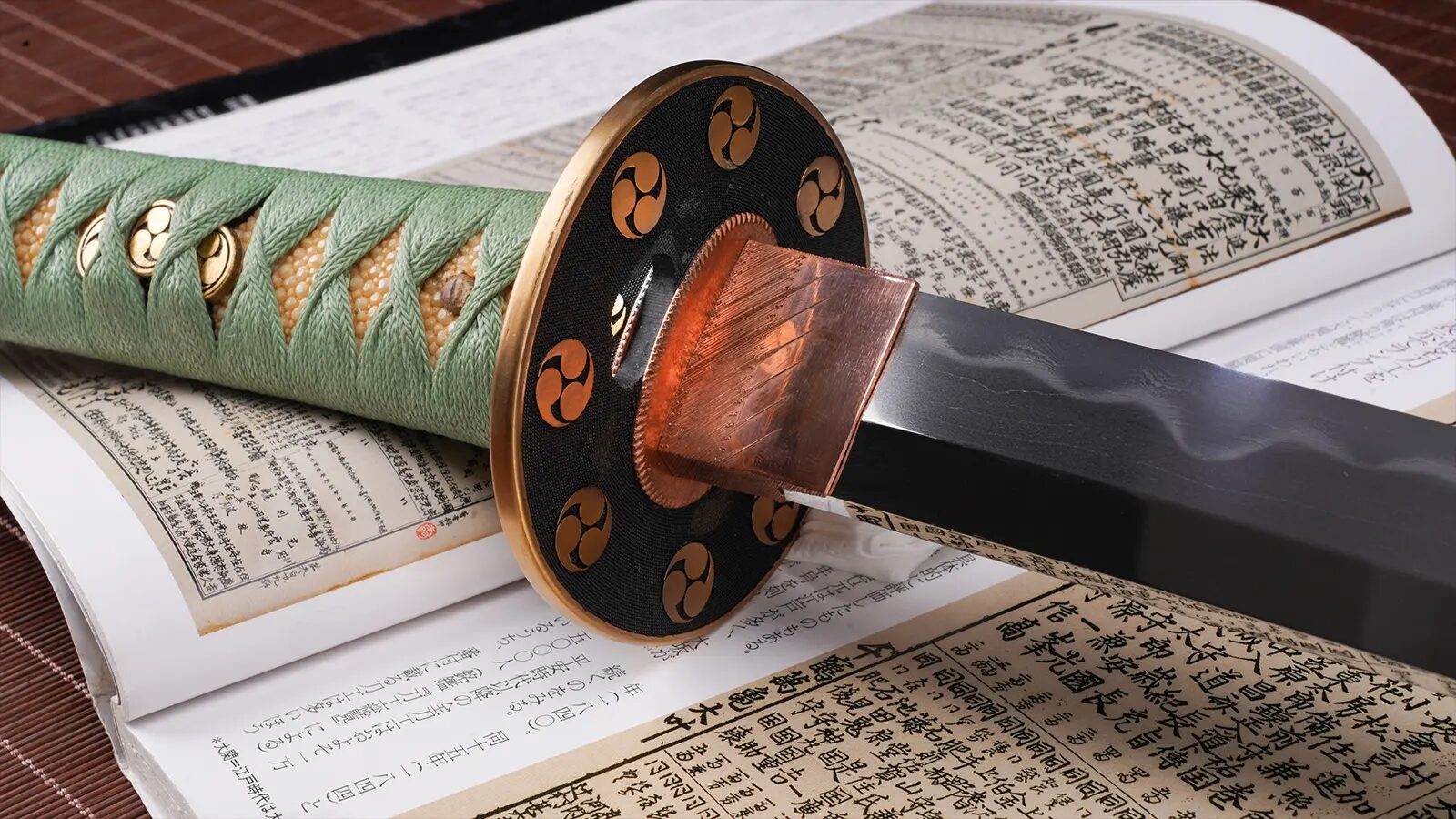
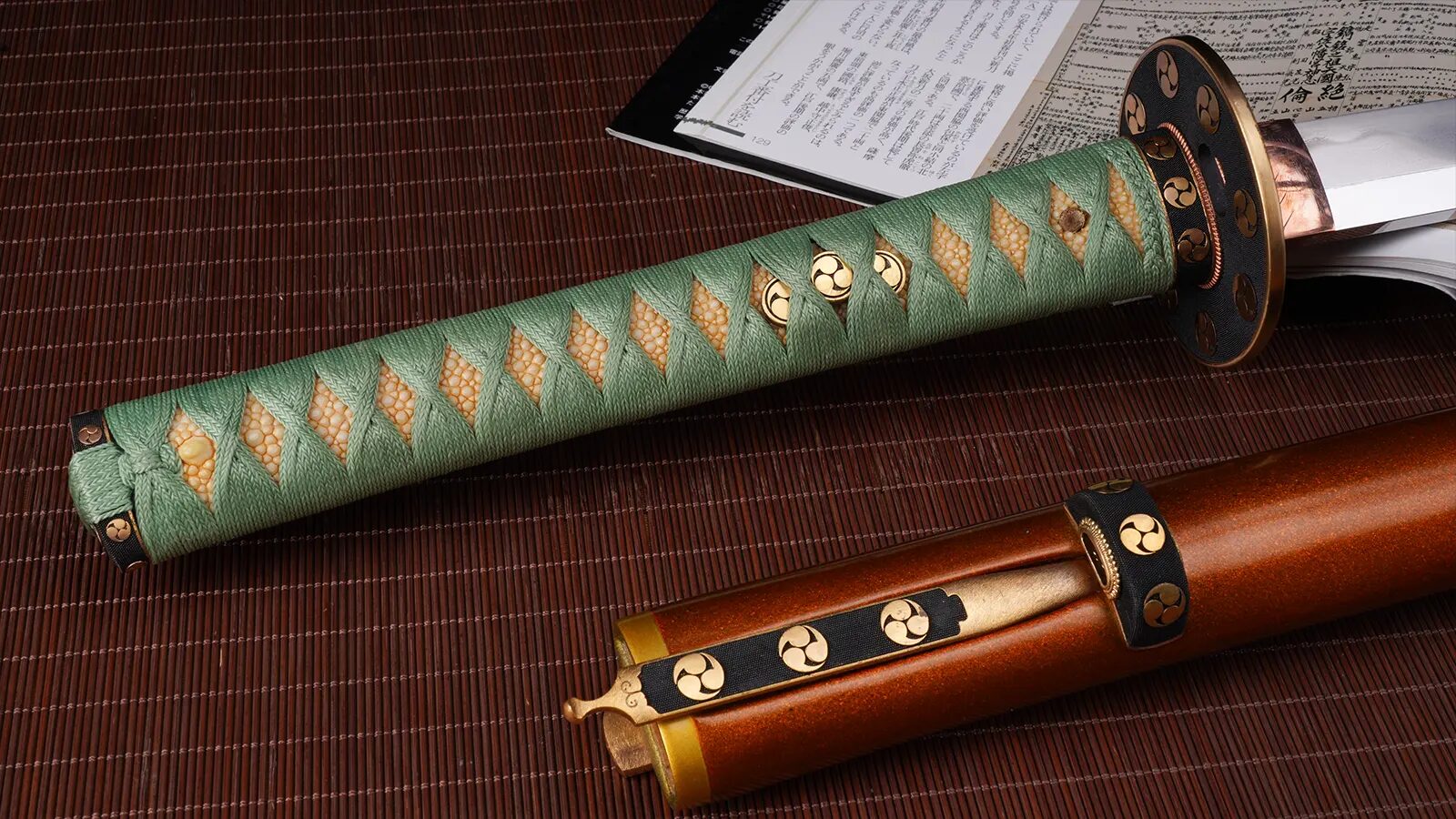
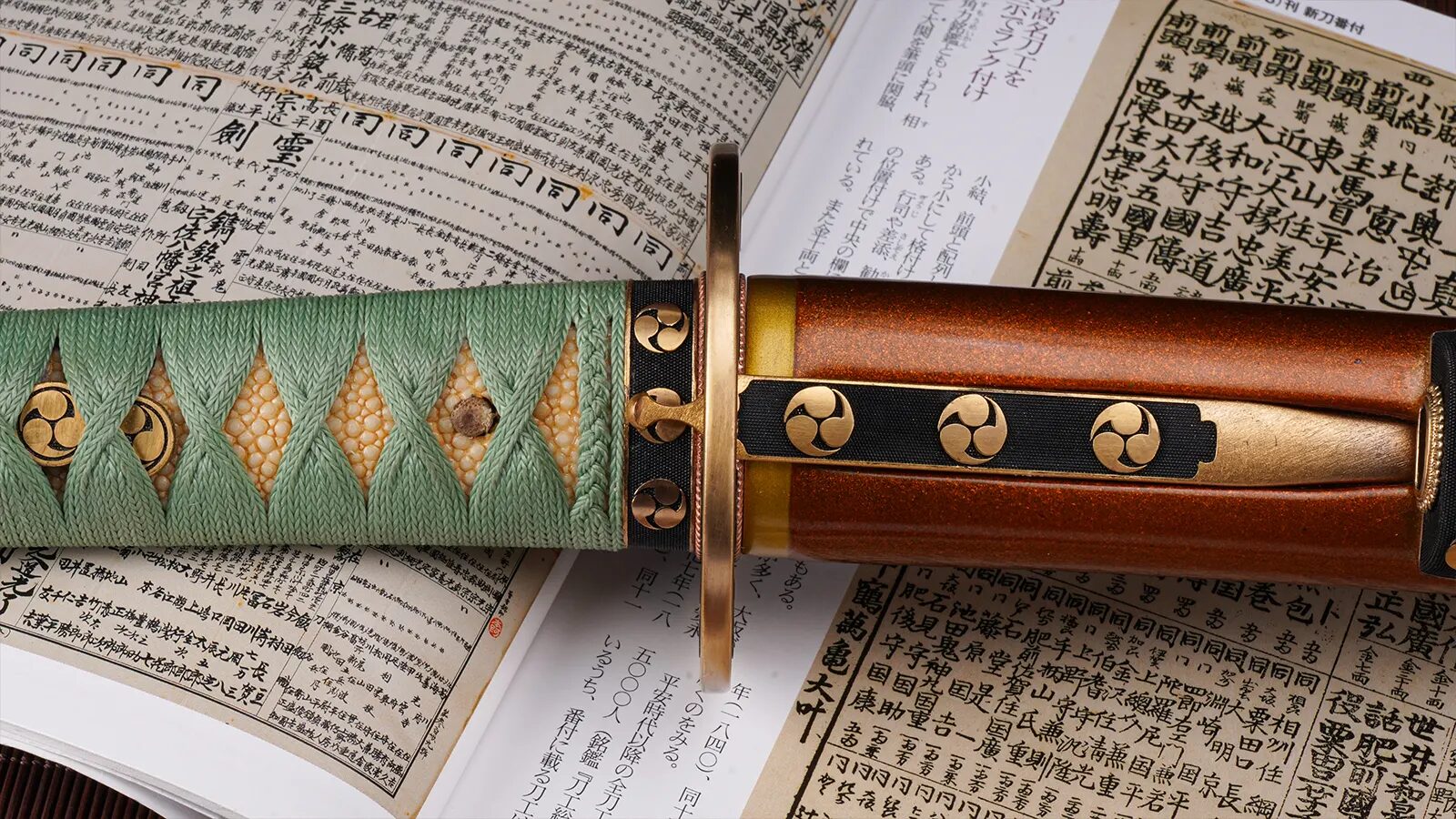
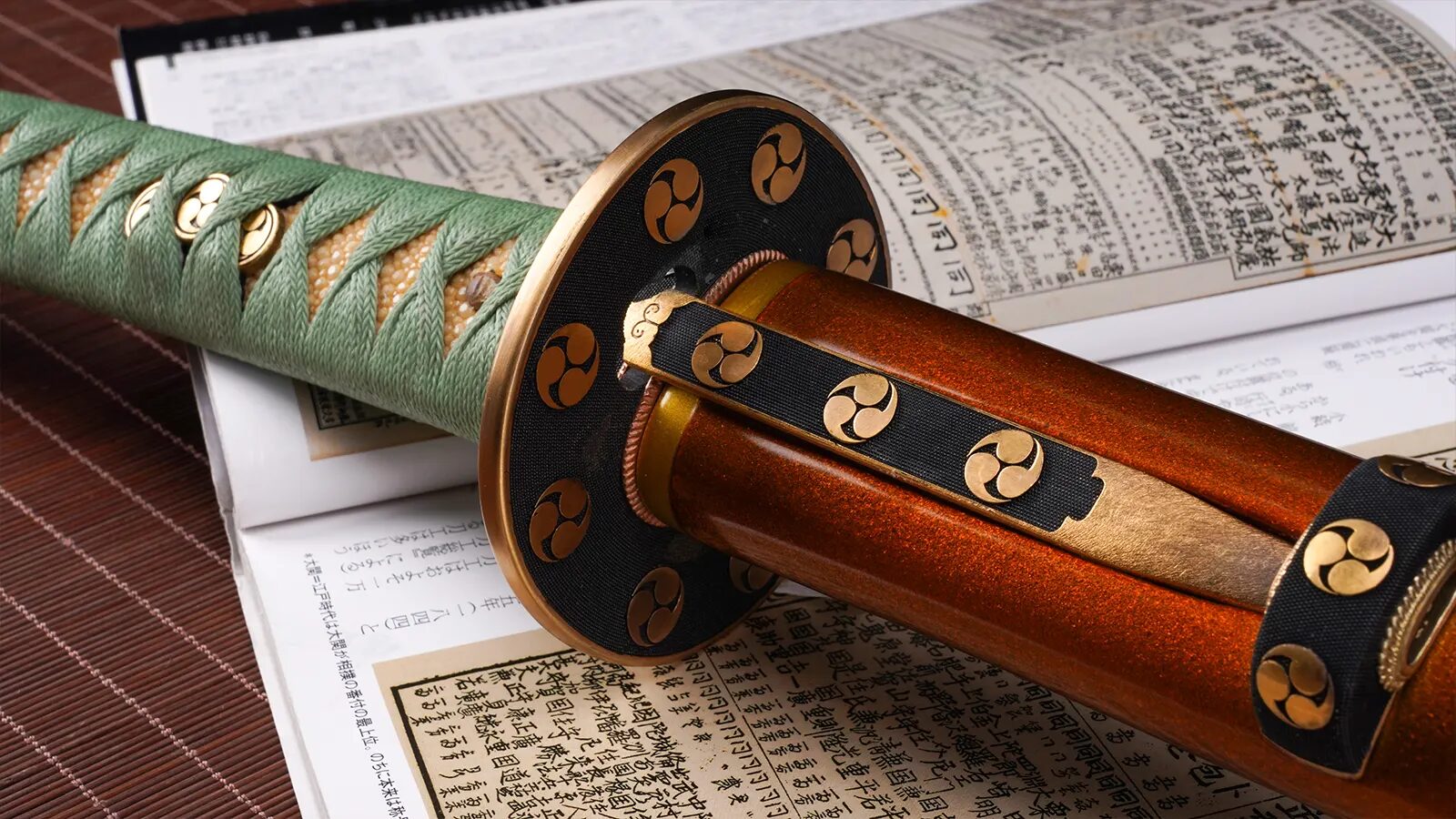
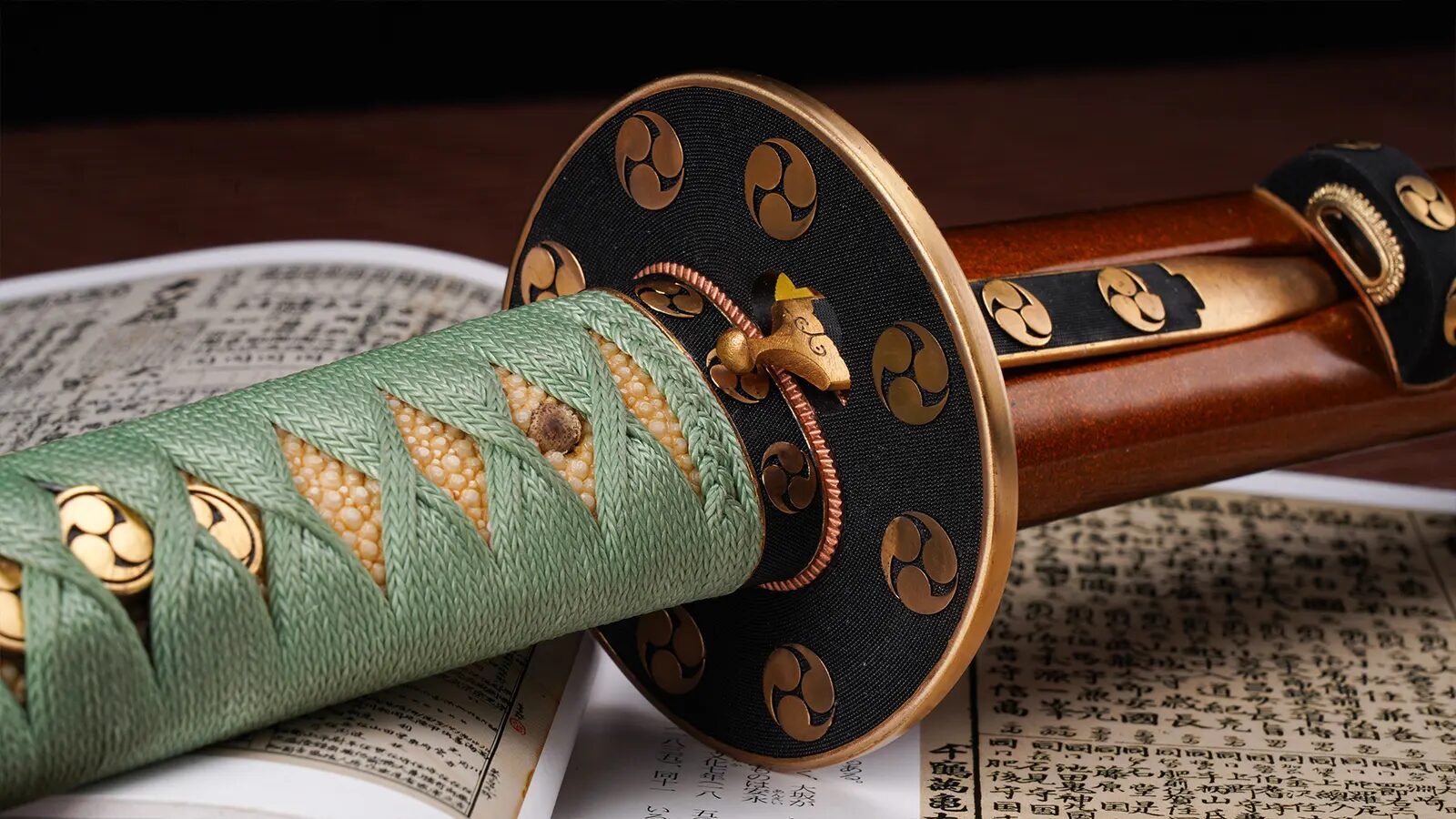
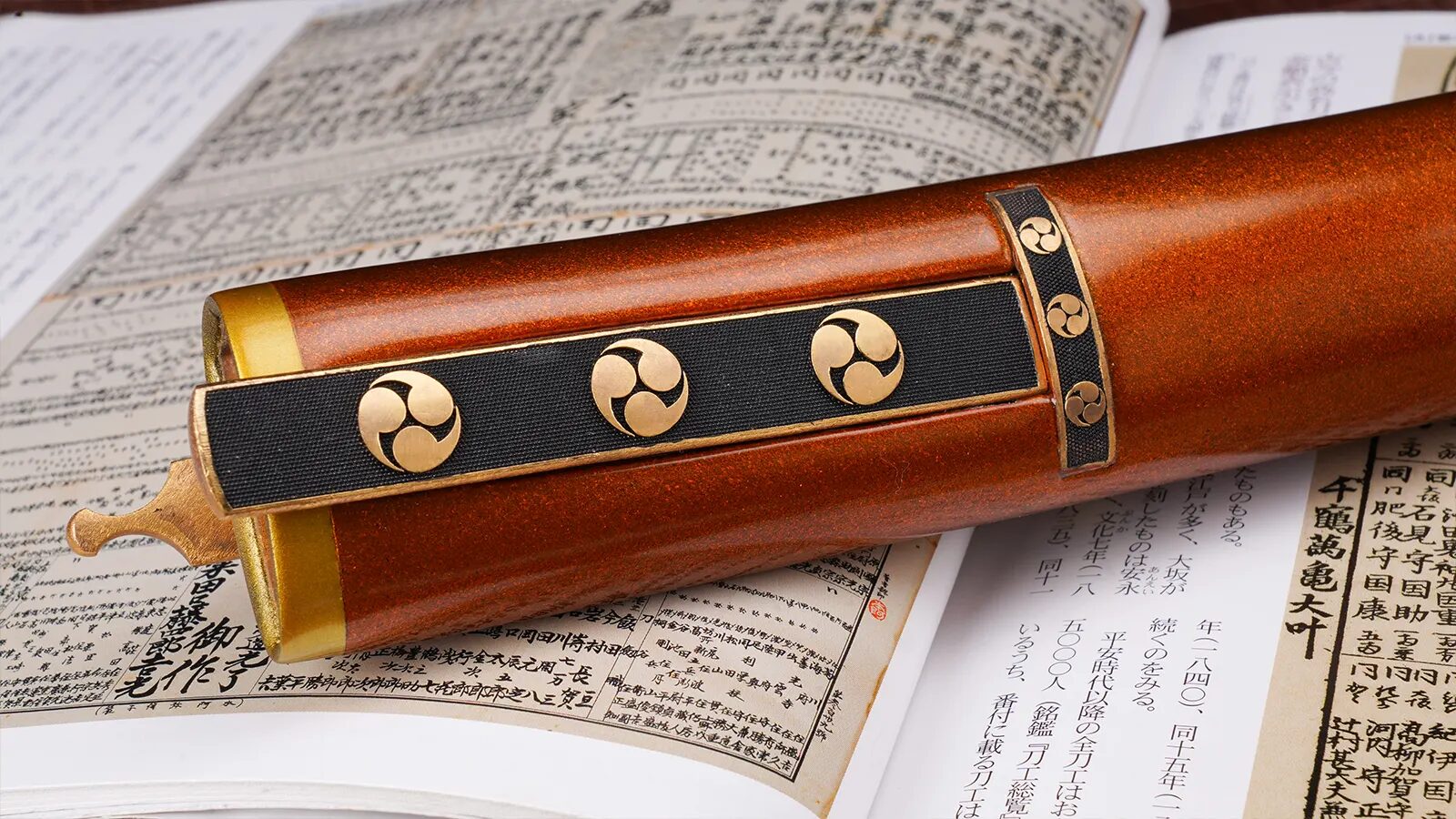
As its name implies, this katana’s premium brass koshirae including its maru gata (round) tsuba, fuchi, kashira, and menuki feature mitsudomoe (三つ巴) motifs, a swirling three-part emblem consisting of three commas arranged around a central point. It is often seen on samurai armor, koshirae, and family crests. Direction matters as well since different clans and shrines favored one direction over the other as part of their identity, as seen in this katana’s hidari mitsudomoe (left turning), as opposed to migi mitsudomoe (right turning).
The mitsudomoe also potentially carries many layers of meaning including the representation of: heaven, earth, and mankind in Shinto concepts; the ongoing cyclical motion of life; and the swirling form of water. Its association with Hachiman, the Shinto-Buddhist deity of war and archery has also led to the adoption of mitsudomoe as kamon (family crests) by various samurai clans, or as motifs on banners, koshirae, and armor as a hope for strength and victory in battle.
Additionally, the adoption of Hachiman as a tutelary deity by the powerful Minamoto (Genji) clan led to the mitsudomoe becoming synonymous with authority and elite martial lineage. Brass seppa and habaki complement the sword’s overall design.
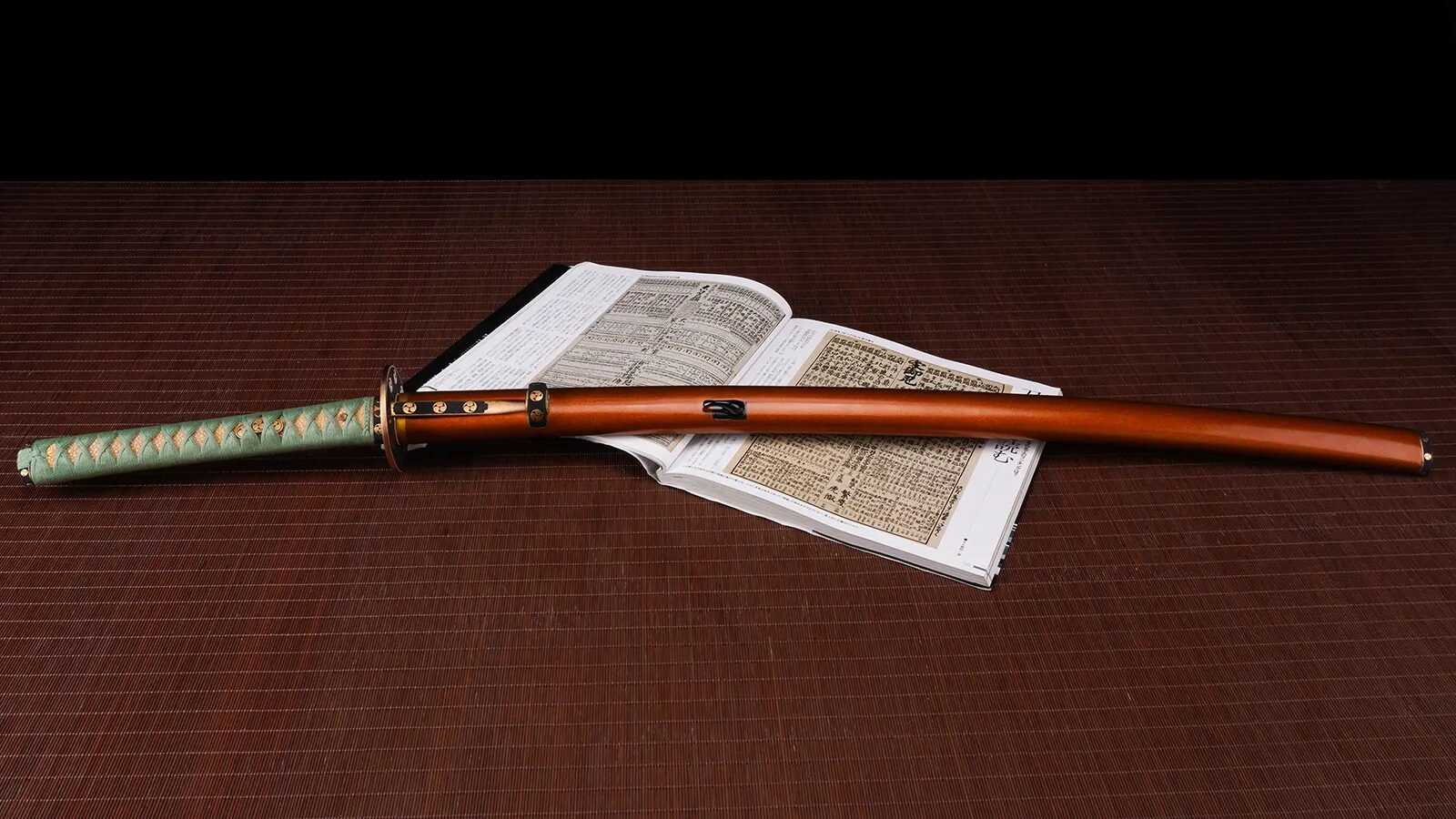
One mekugi secures the nakago to the wooden core Rikko (hourglass shape) tsuka covered in antiqued samegawa. The tightly wrapped tsukamaki using silk ito is in the intricate and visually-striking Jabaramaki, 蛇腹巻 (snake-belly wrapping) style. Complex and time-consuming, it signified status and luxury, commissioned mostly for ceremonial and formal swords or those belonging to wealthy or high-ranking individuals. Practical and decorative, this technique uses fine threads twisted together to create the raised, textured surface to offer a more secure and solid grip.
This masterpiece comes sheathed in a kinriko (gold pear skin) saya fitted with horn koiguchi, as well as brass kurigata, kojiri, and shitodome. One of the most luxurious lacquer styles, kinriko scabbards were mostly reserved for daimyō (feudal lords), kugyō (high ranking court nobles), and formal diplomatic gifts during the Muromachi and Edo periods.
On the scabbard are kogai (笄), historically believed to have served as a hairpin or hairdressing tool, and kozuka (小柄), a decorative handle of a small utility knife. Both slide through their own hitsu ana (openings) on the tsuba. Also with mitsudomoe motifs, this katana has the mutsukoromono (六所物), a rare and fully matching 6-piece set of fittings comprising the kogai, kozuka, fuchigashira, menuki, kurigata, and kojiri, offering collectors an extraordinary level of united harmony.







 Ordering within the USA:
 Shipping outside of USA:


